
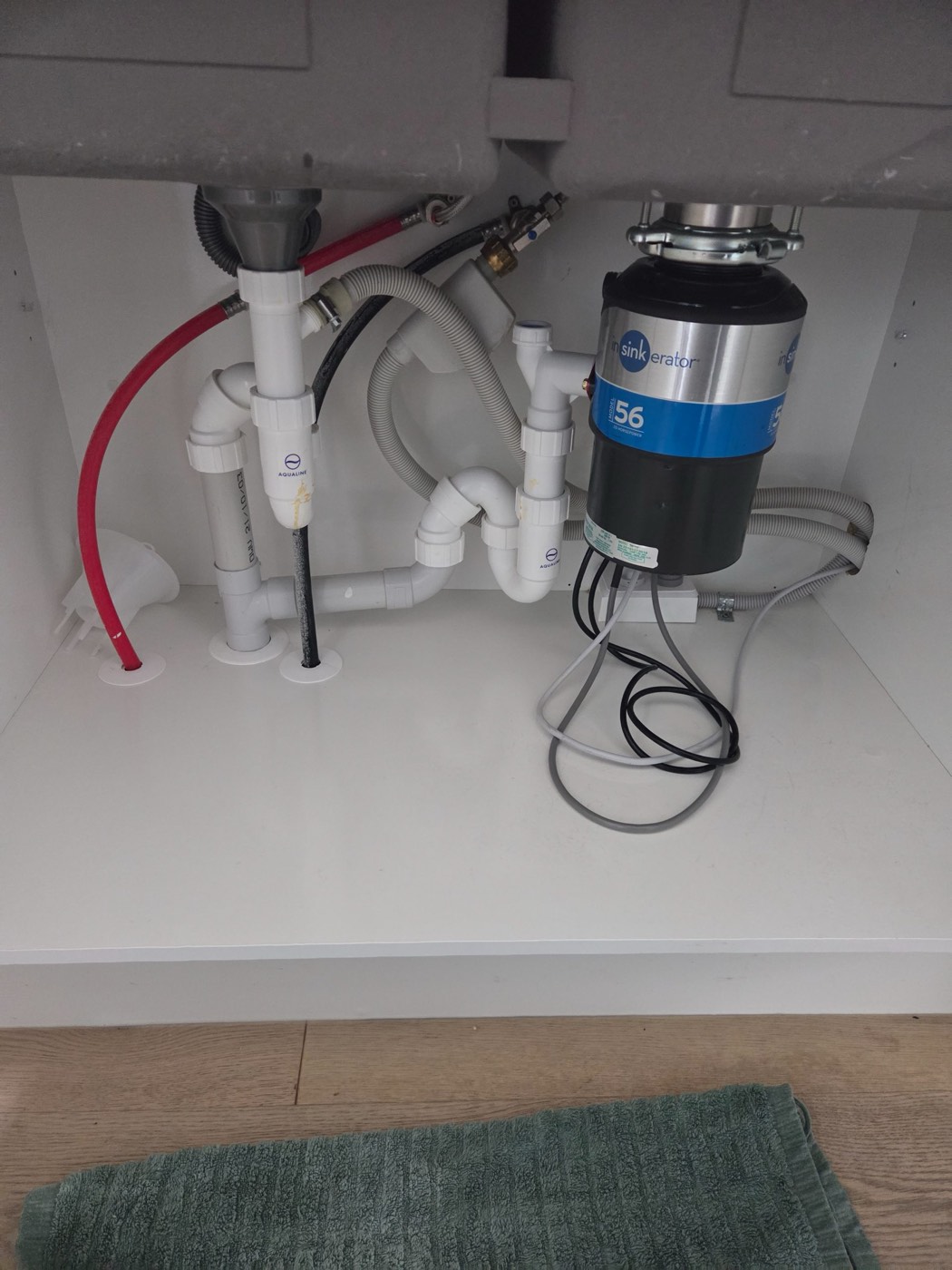
A property manager sent us to a Castor Bay rental with water leaking under the kitchen sink. The tenants had only been in a few weeks, and the house isn’t old.
The tap itself had worked loose. Everything under the sink was fine — no failed washer, no cracked waste, no split hose. The tap had simply gone slack in the benchtop, and water was running down through the mounting hole into the cabinet below.
New house, still leaking
People assume a leak means something has broken, and in an older home it usually does. In a new one it’s more often something that was never quite tight in the first place.
A kitchen tap is held down under the bench with a nut or bracket. If that isn’t done up firmly at installation, normal use does the rest — every time someone swings the spout across the sink, the tap works a fraction looser. A few weeks of that and it’s moving in the hole, the seal underneath stops sealing, and water follows the path of least resistance straight down.
The tell is a tap that wobbles or rotates more freely than it should. That’s worth mentioning to someone before it turns into a wet cabinet floor.
Why it matters more than it looks
The water isn’t going into the sink — it’s going into a chipboard cabinet base. Chipboard soaks it up, swells, and doesn’t recover. A leak that would take ten minutes to sort can quietly ruin the cabinetry underneath if nobody looks in there for a month.
Worth doing once in a while
- Open the cupboard under the sink and put a hand on the base — it should be bone dry
- Give the tap a wiggle. It shouldn’t move against the bench
- Look at the joins on the waste and the hoses for any green or white staining, which means slow weeping
For renters and property managers: it’s an easy thing to add to a routine inspection, and catching it early is the difference between a small job and replacing a cabinet.
If it’s happening at your place
Turn off the isolating valves under the sink (the small taps on the hoses) and stop using it until someone’s looked. If the house is new enough to still be under a builder’s warranty, that’s worth raising too.
We cover Castor Bay and the North Shore. Give us a call and we’ll sort it properly.
Common questions
Why would a tap come loose in a nearly-new house?
Because it was never fully tightened at installation. Normal use does the rest — every swing of the spout works it a fraction looser until it’s moving in the benchtop and water runs down through the mounting hole.
How can I tell if my tap is about to cause a leak?
Give it a wiggle. A kitchen tap shouldn’t move against the bench or rotate more freely than the spout is meant to. Any play is worth sorting before it wets the cabinet.
What should I do if I find water under the sink?
Turn off the isolating valves on the hoses under the sink and stop using it until someone has looked. Then dry the cabinet base — chipboard swells once it’s wet and doesn’t recover.
Is this covered by a builder’s warranty on a new home?
It can be, if the house is still within its warranty period. It’s worth raising with the builder as well as getting the leak stopped — those are two separate things and the second one shouldn’t wait.
How often should I check under the sink?
A quick look every few months is plenty: hand on the cabinet base to check it’s dry, a wiggle of the tap, and a glance at the hose and waste joins for white or green staining that indicates slow weeping.