
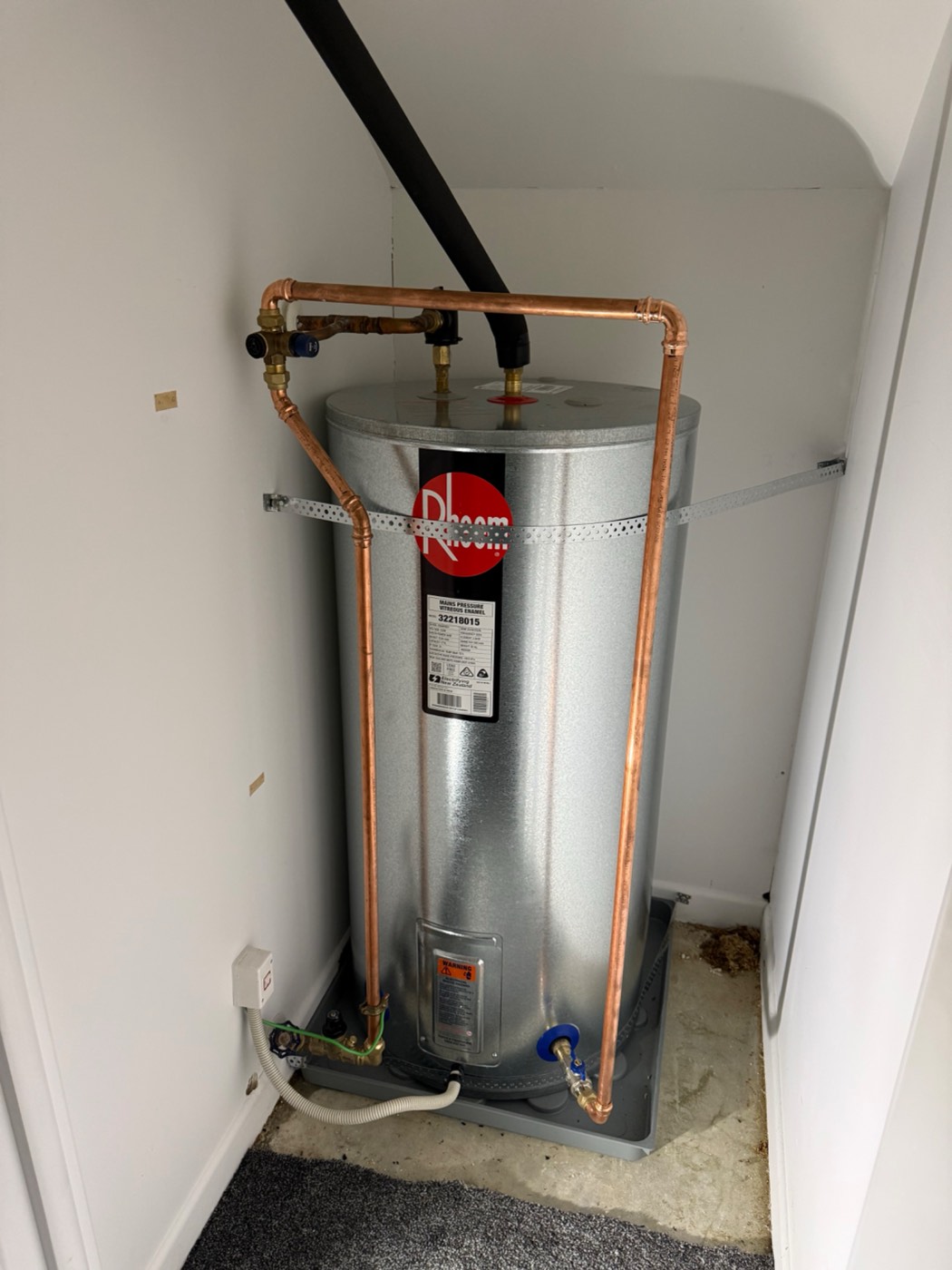
We were called out to a Manukau property where the shower block had no hot water. The house runs two hot water cylinders, and one of them had stopped working. We replaced the failed one with a 180L cylinder and got the hot water back on.
That job also raises a question worth asking if your house has two cylinders: do you actually need two?
Why some houses have two
Two cylinders usually appear for a reason that made sense at the time — a sleepout or minor dwelling added later, a bathroom too far from the original cylinder to get hot water there quickly, or a house that was split into two living areas. Rather than re-plumb the whole house, a second cylinder was added to serve that part of it.
The cost of running two
Every cylinder you own is a tank of water being kept hot around the clock, whether anyone uses it or not. Two cylinders means two lots of standing heat loss, two elements, two thermostats, and eventually two replacements. If one of them is only serving a bathroom that gets used occasionally, you’re paying to keep water hot for very little return.
That’s why a failed cylinder is a good moment to stop and think, rather than automatically swapping like for like.
Can two be combined into one?
Often, yes. Where the layout allows it, we can run the whole house off a single, correctly sized cylinder — one tank to heat, one to maintain, one to replace down the track.
It doesn’t work everywhere. It depends on how far the pipework has to travel, where the existing cylinder sits, what the electrical supply can carry, and whether the house is genuinely one dwelling or two separate ones. Sometimes the honest answer is that two cylinders is the right setup for that house.
This Manukau house was one of those. It’s a large home, and running it off a single tank would have meant long pipe runs and a wait for hot water at the far end. So we kept the two-cylinder layout — both 180L — because that genuinely suited the house better than consolidating would have.
The only way to know is to have someone look at the actual layout. It’s the sort of thing worth asking about before you replace a cylinder, because that’s when the decision is free.
If you’ve got two cylinders
Ask about consolidating next time one needs work. If it can be done, you cut your standing losses and your future replacement costs; if it can’t, at least you’ll know why you’re keeping both.
We cover Manukau and across Auckland — give us a call and we’ll tell you what your place can and can’t do.
Common questions
Why would a house have two hot water cylinders?
Usually because something was added later — a sleepout or minor dwelling, a bathroom too far from the original cylinder, or a house split into two living areas. Adding a second cylinder was cheaper at the time than re-plumbing the whole house.
Does two cylinders cost more to run?
Yes, all else being equal. Each cylinder keeps a tank of water hot around the clock whether it’s used or not, so you’re paying two lots of standing heat loss, and eventually two replacements.
Can two cylinders be combined into one?
Often, but not always. It depends on the pipe runs, where the existing cylinder sits, what the electrical supply can carry, and whether the house is genuinely one dwelling. In a large home, one tank can mean a long wait for hot water at the far end — which is why this Manukau house kept both.
What size cylinder do I need?
It comes down to how many people live there and how the hot water is used, not just the size of the house. We’d rather size it to the household than swap like for like without asking.
Can I replace one cylinder now and the other later?
Yes, and that’s often the sensible order. Replace the one that’s failed, and use that visit to work out what should happen with the second one when its turn comes.