
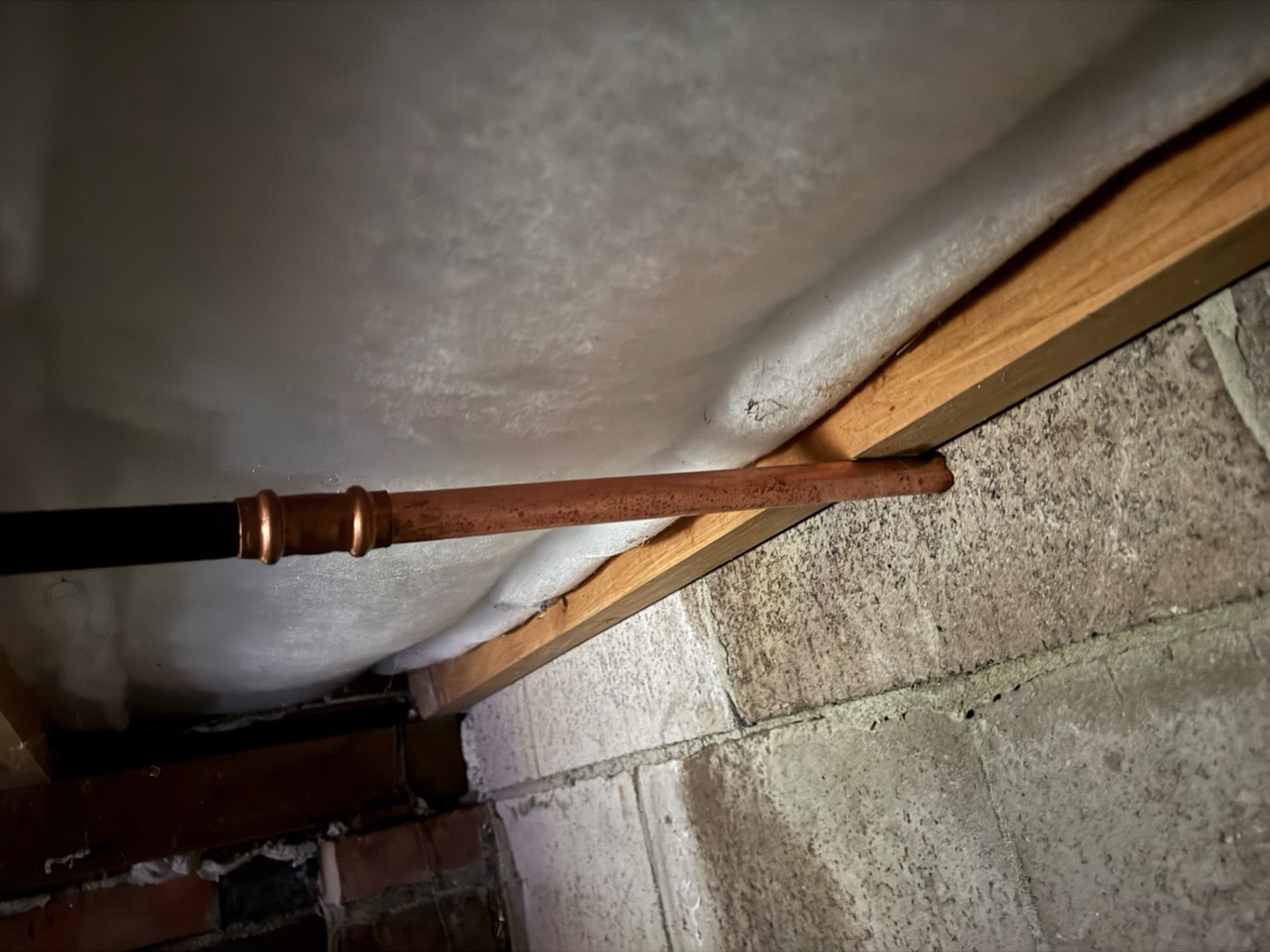
A Milford homeowner called about water leaking somewhere under the house. We got underneath and found it: an old water pipe running through the subfloor timbers, with a fitting that had simply corroded away. We repaired it and the house was dry again.
Houses age the same way we do
As we get older, things start going wrong one at a time — and houses are no different. An older home that’s given you decades of trouble-free plumbing has done well. When something finally lets go, it’s not a sign the house is falling apart; it’s a sign that a part reached the end of its life.
The useful thing to know is which part usually goes first.
It’s almost always the fittings, not the pipe
On older plumbing, the straight runs of pipe often outlast the joints. Fittings are where two metals meet, where the wall is thinnest, and where water changes direction — so that’s where corrosion concentrates. We see far more leaks at elbows, tees and connections than in the middle of a length of pipe.
That matters when someone tells you the whole house needs re-piping. Sometimes it genuinely does. Often the right answer is to repair the failed joint now, and keep an eye on the rest.
Under-floor leaks are quiet
A leak under the house doesn’t show up on your ceiling or run across your floor, so it can go on for a long time before anyone notices. Things worth watching for:
- A water bill that’s crept up with no change in how you use water
- The water meter still ticking over when every tap in the house is off
- A damp, musty smell in the house, or damp ground under it
- Water pressure that’s dropped slightly
If you can safely get under the house with a torch, look along the pipework at the joints, and at the timber below them — a slow leak leaves a stain or a wet patch long before it becomes obvious.
What we’d do
Find the actual failure point, repair it properly, and tell you honestly what condition the rest of the pipework is in — including if it’s fine and you should leave it alone.
We work across Milford and the North Shore. Give us a call if something under your house doesn’t look right.
Common questions
How do I know if I have a leak under the house?
Check the water meter with every tap in the house turned off — if it’s still ticking over, water is going somewhere. A bill that’s crept up, a musty smell, damp ground under the house or a slight drop in pressure are the other signs.
Does one failed fitting mean the whole house needs re-piping?
Not necessarily. On older plumbing the joints usually fail before the straight runs, so repairing the failed joint is often the right answer. Full re-piping makes sense when failures start repeating or the pipe itself is in poor condition — we’ll tell you honestly which situation you’re in.
Why do fittings corrode before the pipe does?
Fittings are where two metals meet, where the wall is thinnest, and where water changes direction. Corrosion concentrates there, which is why we see far more leaks at elbows, tees and connections than mid-pipe.
Can I check under the house myself?
If you can get under safely with a torch, look along the pipework at the joints and at the timber underneath them. A slow leak leaves a stain or a wet patch well before it becomes obvious. If access is tight or the ground is wet, leave it to someone with the gear.
How urgent is a small under-floor leak?
More urgent than it looks. It’s not damaging your ceiling so it feels minor, but it’s wetting framing and running up your water bill the whole time it goes unfixed.