
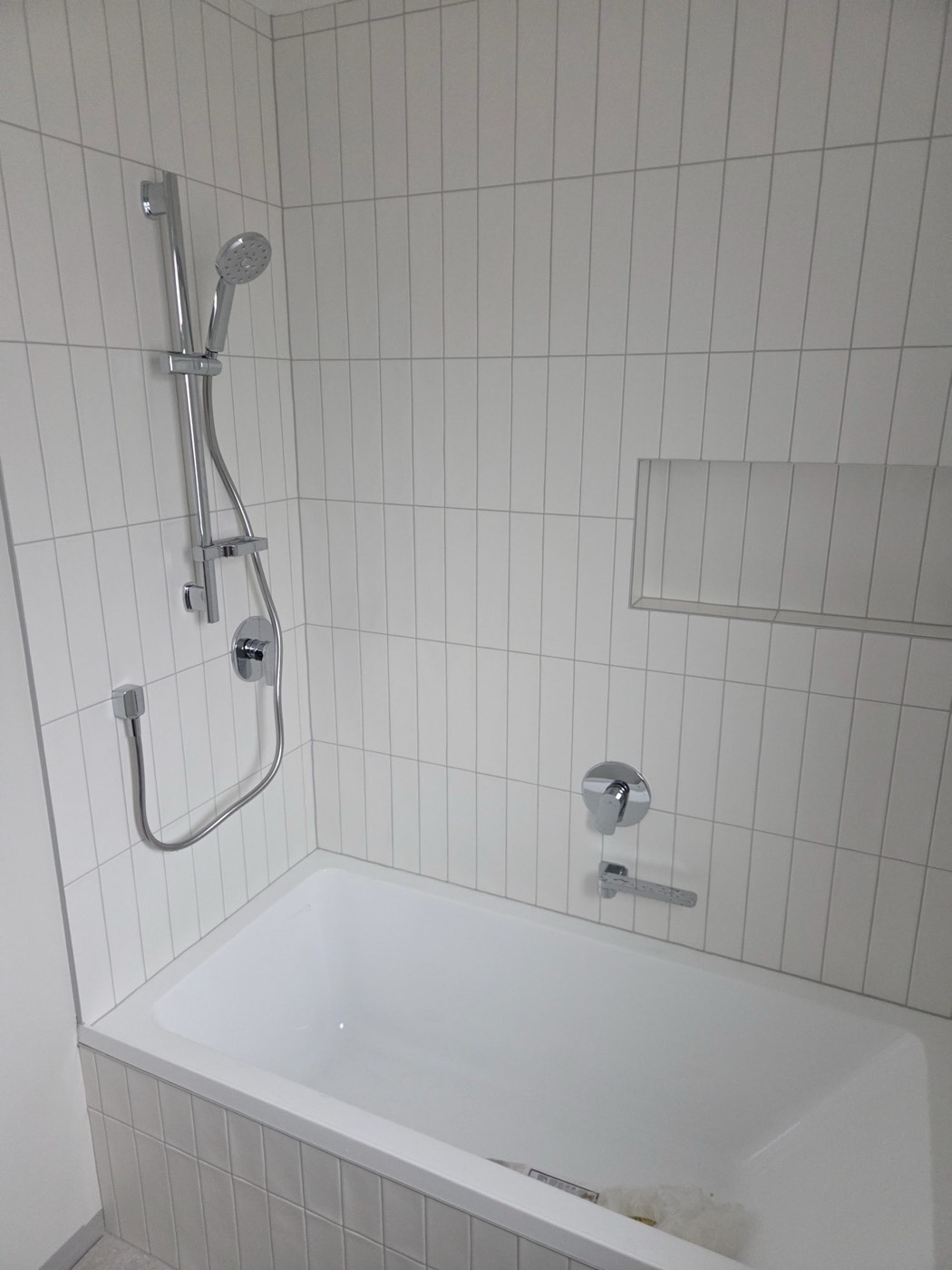
A Titirangi homeowner was renovating — the main bathroom stripped back and redone, plus a second bathroom added where there wasn’t one. The plan was to keep the existing low-pressure hot water cylinder and spend the budget on the fit-out.
We raised it before the shower mixer went in — which turned out to be exactly the right moment, and the reason is worth explaining, because it catches a lot of people out.
The shower mixer forces the decision
During a renovation you have to choose the shower mixer early — it goes into the wall before the lining and tiles go on. And mixers are not interchangeable: a mixer made for a low-pressure system is a different valve from one made for mains pressure.
So if you fit a low-pressure mixer, tile over it, and upgrade the cylinder a few years later, the mixer no longer suits the system. Changing it then means opening the wall back up — new tiles, new waterproofing, a tradesperson back in a finished bathroom.
Here the mixer hadn’t gone in yet, so there was still a free choice: fit low-pressure gear and stay on low pressure, or upgrade the cylinder now and put mains-pressure fittings in from the start.
Most of the other fittings aren’t like this. Basin taps, a kitchen tap, a shower rail — if those need changing later they’re a small job, and the cylinder itself can be swapped at any time. The shower mixer is the exception, because it’s the one part that ends up buried in the wall.
That’s why the cylinder decision belongs at the start of a renovation, not after it.
What we did
We replaced the low-pressure cylinder with a 180L 3kW Rheem mains-pressure electric cylinder, installed underfloor, and the bathrooms were fitted out with mains-pressure fittings to match. While we were there we also sorted a leaking laundry tap and improved the flow to it.
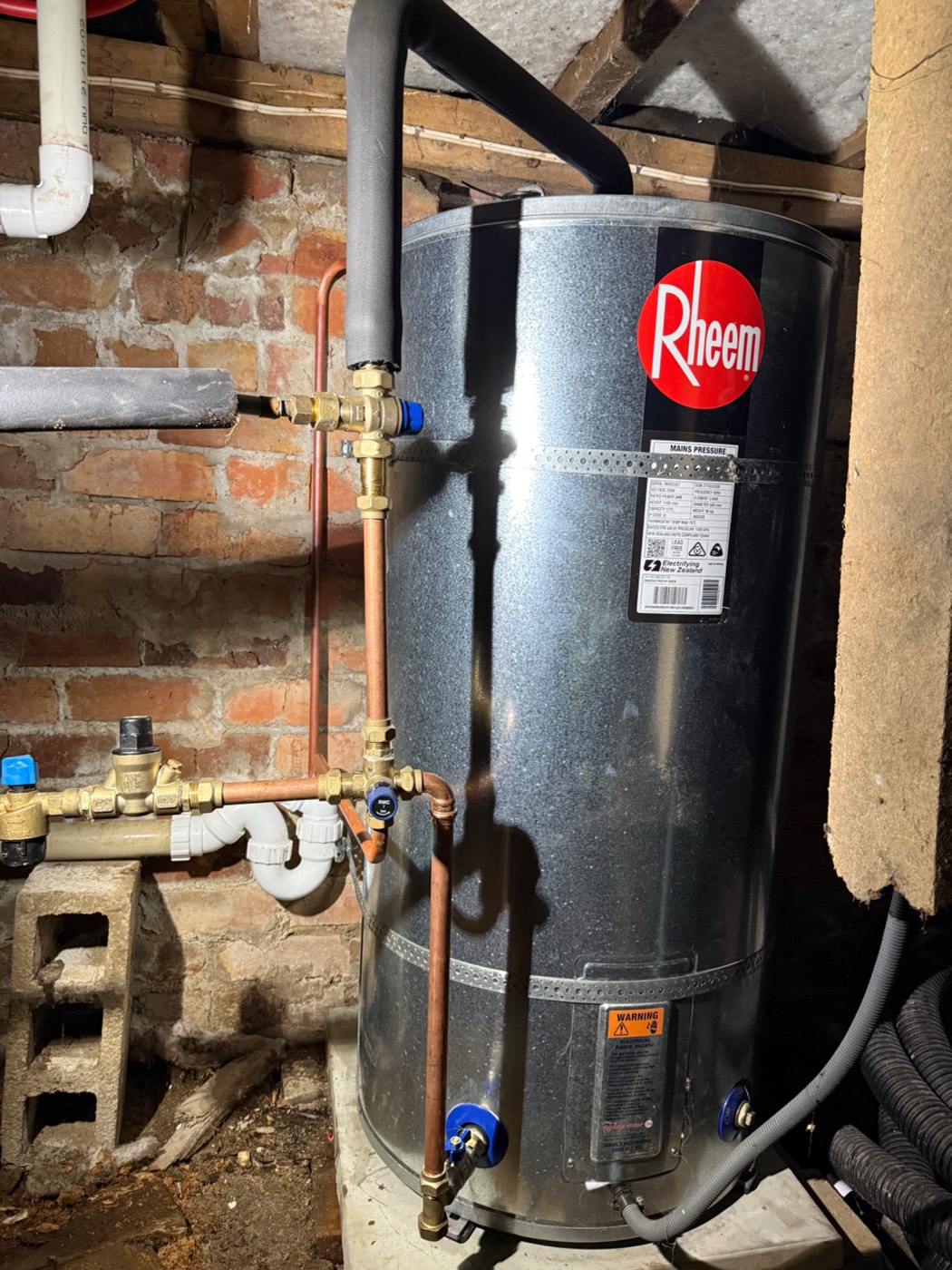
The job ran across the renovation programme — cap-off at the start, rough-in while the walls were open, then fit-off once the linings and tiles were done, with a final check before handover.
What it means day to day
Mains pressure is the difference between a shower that trickles and one that actually rinses shampoo out of your hair. It also means the shower doesn’t lose pressure the moment someone runs a tap in the kitchen, and it lets you use standard tapware instead of low-pressure-only fittings.
Planning a bathroom in West Auckland?
If your house still runs on a low-pressure cylinder and you’re renovating, talk to a plumber before you choose tapware — not after. It’s a much cheaper conversation at the planning stage.
We work across Titirangi and West Auckland. Give us a call and we’ll walk you through what your existing system can and can’t do.
Common questions
How do I know if I’m on low pressure or mains pressure?
A low-pressure system usually has a vent pipe running from the cylinder out through the roof, and the shower flow drops noticeably when someone runs a tap elsewhere. Mains-pressure cylinders have a valve set on the inlet instead of an open vent. If you’re not sure, send us a photo of your cylinder and we’ll tell you.
Can I just put mains pressure through my existing cylinder?
No. A low-pressure cylinder isn’t built to hold mains pressure, so the upgrade means a new cylinder rather than a conversion. That’s why it’s better decided at the start of a renovation than after the walls close up.
What else has to change when I upgrade?
Tapware and the shower mixer need to suit mains pressure, and the cylinder needs its valve set and a tempering valve so the water reaching the bathroom is at a safe temperature. Sometimes the pipe sizing to the bathroom is worth reviewing at the same time.
When in the renovation should the plumber be involved?
Before anything is ordered. Cap-off happens at the start, rough-in while the walls are open, and fit-off after the linings and tiles are done — but the decisions about what goes in the wall have to be made before any of that.
Is mains pressure actually better?
For most households, yes — stronger shower flow, standard tapware, and no drop in pressure when someone uses another tap. The exception is a house where the layout or supply makes it impractical, and in that case we’ll say so.