
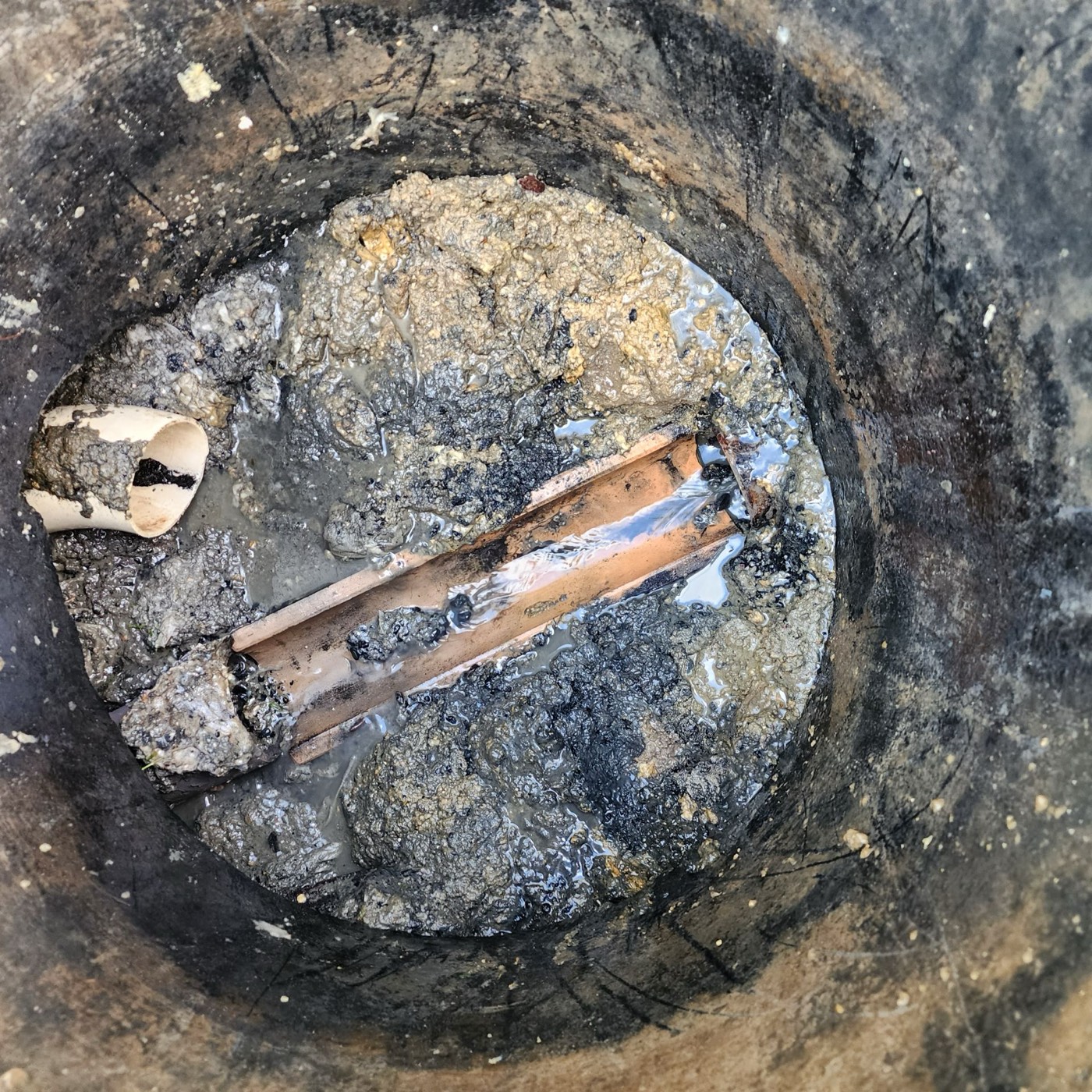
An urgent call came through from a property manager: sewage overflowing onto the driveway of a West Harbour rental. Wet, dirty, and not something anyone can live with for long.
This one turned out to be a genuinely hard job, and it’s a good example of why a blockage isn’t always just a blockage.
What we found
The driveway sat over a chamber shared by two properties — one set of underground pipework serving both houses. The chamber was old earthenware, and age had finally caught up with it: the pipe had cracked.
Once a chamber like that breaks up, it doesn’t drain the way it was built to. Debris catches on the broken edges, ground and silt work their way in, and eventually the flow backs up and finds the easiest way out — in this case, up and onto the driveway.
Getting it under control first
The first job was to stop the overflow. A vacuum truck emptied the chamber and the line was cleared, which got the drain running and the driveway usable again.
That’s the emergency fixed, but not the cause. A cracked earthenware chamber will keep collecting debris and keep blocking, so we reported back that the chamber itself needs replacing rather than just clearing it again next time. We arranged a quote for that work so the owner could make the call with the full picture.
Why old earthenware causes this
A lot of older Auckland properties still have earthenware (clay) drainage. It was good pipe in its day, but it’s brittle, the joints are rigid, and decades of ground movement, tree roots and traffic overhead eventually crack it. Once it’s cracked you’re on borrowed time — clearing the blockage buys you months, not years.
Signs worth taking seriously:
- Repeat blockages in the same place, especially after rain
- Gurgling from gullies or toilets when a shower or washing machine drains
- Wet patches or smell around a driveway, gully or manhole lid
Shared drains between two properties
Where a chamber or line serves more than one property, work on it affects both. It’s worth establishing early who owns what — it saves an argument later, and it usually means the repair gets approved faster because everyone knows where they stand. For a rental, the property manager and owner will want that mapped out before the work starts.
If your driveway is overflowing
Stop using water inside the house — every flush and every load of washing adds to what’s coming up outside — and get someone out the same day. Sewage on a driveway is a health issue, not just an inconvenience.
We cover West Harbour and the wider west and north-west. Call us and we’ll get it under control first, then tell you honestly whether it needs clearing or fixing properly.
Common questions
Who is responsible for the drain — me or Watercare?
As a rule, the public sewer main is the network operator’s responsibility and the private drain on your property is yours. A chamber or line serving two properties is shared between those owners, which is worth establishing early so the repair isn’t held up by an argument about who pays.
Why does the same drain keep blocking?
Repeat blockages in the same spot almost always mean something structural — a cracked pipe, a failed chamber, or roots getting in through a joint. Clearing it buys time; a camera inspection tells you what’s actually wrong.
What is earthenware pipe and why does it fail?
It’s the glazed clay pipe used in older Auckland properties. It was good pipe in its day, but it’s brittle with rigid joints, so decades of ground movement, roots and traffic overhead eventually crack it.
What should I do while I wait for someone to arrive?
Stop using water inside the house — every flush and every load of washing adds to what’s coming up outside — and keep people and pets away from it. Sewage on a driveway is a health issue, not just a mess.
Do you need a camera inspection every time?
No. For a one-off blockage with an obvious cause, clearing it is enough. We recommend the camera when a drain blocks repeatedly, when the ground is wet with no explanation, or before spending money on a repair so we know exactly what to fix.