
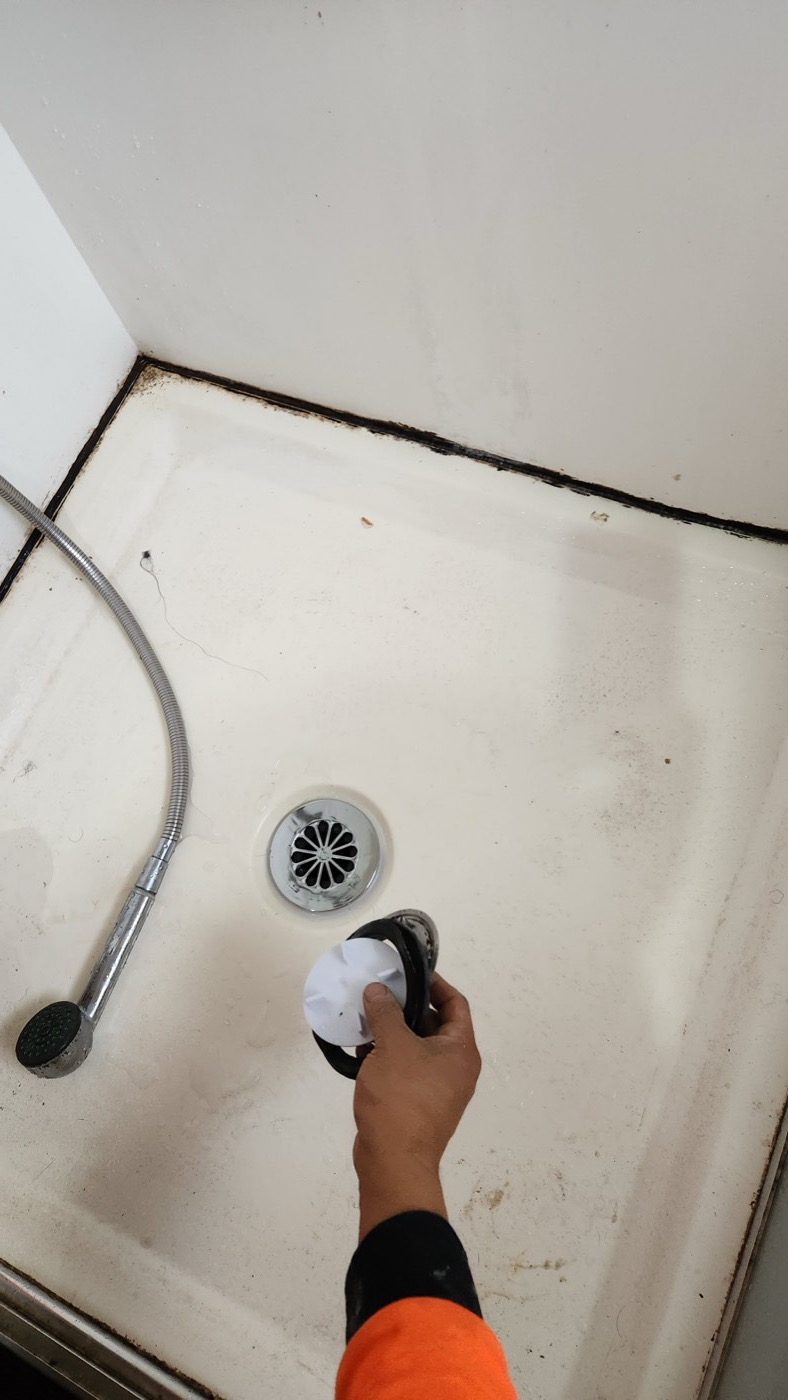
A household in Manurewa rang about a bad smell in the bathroom that would not go away, no matter how often the shower was cleaned. The basin and the bath were also slow to drain. We found the shower’s plastic “easy-clean” waste trap had broken, so it was no longer holding a seal of water. We replaced the trap, cleared the partial blockages in the basin and the bath, and the smell went with it.
That is the most common version of this problem we see. The smell is real, it is coming from the drain, and the cause is usually a small part rather than anything wrong with the sewer itself.
Where is the smell actually coming from?
Every fixture in your bathroom — shower, basin, bath, toilet, floor waste — connects to the same sewer. What stops that sewer air coming back up into the room is a trap: a bend or cup under each fixture that holds a small plug of water. Water in, sewer air stays out.
So when a bathroom smells like sewage, the question is almost always “which trap has lost its water, or which seal has a gap?” Not “is the sewer broken?”
Stand in the room and get close to each fixture in turn. The smell is nearly always strongest right at the source. Showers and floor wastes are the usual suspects, then the toilet base, then the basin.
Why would a trap stop holding water?
There are four common reasons:
- It is broken or missing. Shower wastes with a removable easy-clean insert rely on that plastic insert to form the seal. If it cracks, is left out after cleaning, or has been pushed in crooked, there is no water seal at all. That was the Manurewa job.
- It has dried out. A shower or floor waste that nobody uses — the spare bathroom, a laundry floor drain — will slowly evaporate its water. A few weeks is enough in summer.
- It is being siphoned. When a large volume of water rushes past, it can pull the water out of a nearby trap. You may hear a gurgle from the basin when the toilet flushes or the bath empties. That points to a venting problem or a partial blockage further down.
- It is full of gunk. Hair, soap scum and skin build up in the trap and the pipe after it. That buildup smells on its own, even with the water seal in place, and it slows drainage.
What can I check before calling a plumber?
A few things are worth doing yourself:
- Run water into every fixture for 30 seconds, including the one you never use and any floor waste. If the smell fades within a day, a dry trap was the cause and you just need to use that fixture now and then.
- Pull out the shower waste insert if yours has one. Check it is there, it is not cracked, and it sits properly when you push it back in. Clean the hair out while you are there.
- Watch the drains. If the basin or bath is slow, or you hear gurgling from one fixture when you use another, there is likely a partial blockage and the trap is being disturbed.
- Look at the base of the toilet. A smell that is strongest around the pan, especially after flushing, can be a gap in the pan connector behind the toilet.
Do not pour caustic drain cleaner down a shower you suspect is broken. If the trap is cracked, the chemical will not fix it, and it can damage the plastic further.
When is it a plumbing job?
Call someone if the smell is still there after you have run water through everything, if drains are slow or gurgling, or if the smell is around the toilet base. Those are signs of a broken trap, a blockage beyond hand reach, or a failed seal, and each needs parts or access you probably do not have.
A plumber will usually take the trap apart, check the seal, clear the line after it and flow-test each fixture. Most of the time that is a single visit. If the smell is coming from deeper in the waste — construction debris lodged in a floor waste, or a disconnected pipe under the house — it can take a camera or opening up a panel to find.
Can a sewer smell be dangerous?
Sewer gas in a bathroom at the level you can smell is unpleasant rather than dangerous in most homes, but it should not be left. It means the barrier between your house and the sewer is not working, and a smell that suddenly appears often goes with a blockage that is getting worse.
One exception: if what you are smelling is closer to rotten eggs and it is near a gas appliance, treat it as a possible gas leak rather than a drain. Turn the gas off at the meter or bottle, open windows, and call a gasfitter.
Common questions
Why does my bathroom only smell sometimes?
An intermittent smell usually points to a trap that is being siphoned or one that is drying out between uses. If it smells after someone has had a long shower or a bath has emptied, suspect siphoning and a venting or blockage problem. If it smells after a few days away, the water in a little-used trap has evaporated. Running water through every fixture regularly will sort the second one.
Why does my shower smell like sewage but not the rest of the bathroom?
Showers have the shallowest traps in the house, so they lose their seal the easiest. The plastic easy-clean inserts in many showers also crack or get put back wrong after cleaning. Hair and soap buildup sitting in the trap smells on its own too. Pull the insert out, check it, clean it and push it firmly back in before anything else.
Can a toilet cause a sewer smell without leaking?
Yes. The pan connector at the back of the toilet joins the pan to the waste pipe. If it has a gap, sewer air can come out without any visible water. The smell is usually strongest around the base or behind the pan, and sometimes just after a flush. Resealing or replacing the connector fixes it.
Will drain cleaner get rid of the smell?
Only if the smell is buildup inside a trap that is otherwise working, and even then a proper clean does the same job without the risk. It will not fix a broken trap, a dry floor waste or a gapped seal, which are the more common causes. On older plastic fittings, strong chemicals can make things worse.
Is this the landlord’s job or the tenant’s?
In most rentals, a broken trap or failed seal is a repair the landlord or property manager arranges, because it is part of the building’s plumbing. A dry trap from an unused shower, or hair in the waste, is usually a tenant’s maintenance. If you are not sure, tell your property manager what you have checked and let them decide who books it.
Related reading
- Blocked drains in Auckland: the full guide
- Why your gully trap is overflowing
- Why you should never wash down a bathroom floor
- Bathroom renovation plumbing in Auckland
A lingering bathroom smell is usually a small part that has stopped doing its job. We cover Manurewa and South Auckland. Call 021 837 775.