
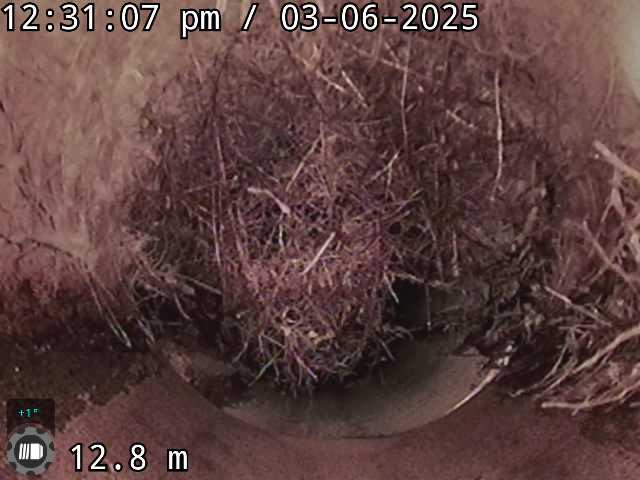
Tree roots do not just cause blocked drains. They are the most common cause of blocked drains in Auckland, particularly in older suburbs where the drain pipes were laid in short earthenware sections joined by mortar. Over decades the joints move, the roots find the moisture, and the blockage is the symptom — not the whole problem.
The question that matters is whether clearing the drain once solves it, or whether the same roots will be back in six months demanding another visit and another charge.
Why Auckland drains are so vulnerable to tree roots
The answer is age and pipe material. Most of Auckland’s residential drains were laid in the 1950s through the 1970s using short lengths of earthenware pipe — short enough that each length had a joint where it met the next one. Those joints were sealed with mortar, which moved and cracked over fifty or sixty years.
Tree roots follow the moisture. A crack no wider than a human hair is enough. The root does not have to break the pipe to block it — it just has to grow into the line, and once it is there every piece of toilet paper and every bit of grit in the wastewater catches on it. A single root filament can become a mat that closes the entire pipe.
Concrete and PVC pipes laid from the 1980s onward are far less vulnerable, but any pipe has joints, and any joint can leak moisture into surrounding soil where roots are waiting.
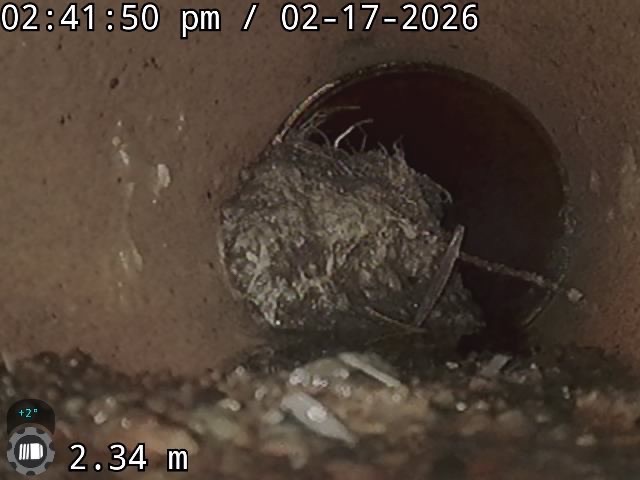 CCTV on a Glenfield job: a ball of roots and caught waste sitting at a pipe joint about two metres in. The gully and private manhole upstream were both full.
How to tell if tree roots are your blockage
The simplest way is that it happens repeatedly. A healthy drain clears and stays clear for years. A drain that blocks every winter, or that clears and blocks again within months, is usually telling you that something structural is attracting roots back to the same spot.
The second sign is where the blockage is. When we clear it, we put a camera down to see where the roots got in. If the CCTV shows roots entering at the same location every time, that is a crack or failed joint that is going to keep drawing them in.
The third sign is what we find when we do clear it. Roots look like thin green or brown filaments matted together — they look like hair in a shower drain, but much finer and throughout the entire pipe cross-section.
If a drain is completely full of compacted fat (which happens in kitchen waste lines) the roots are usually not the primary cause. If it is a tangle of filaments with bits of solids caught in them, roots are the answer.
Clearing tree roots is not the same as fixing them
This is the distinction that saves money or costs it depending on whether you understand it now.
Clearing a blocked drain means jetting it clean or using a drain machine to push the blockage out. After clearing, the drain flows normally again. The problem is solved — for now.
Fixing a drain where roots are getting in means repairing the crack or failed joint that let the roots in to begin with. That is a different job, quoted separately, because a single failed joint two metres down under the lawn is a different price from a whole line that is full of small cracks and needs relining.
On a job in Saint Johns, the waste chamber was overflowing with sewage. We jetted the line clear and the CCTV showed a tree root growing into the sewer pipe. A week later we dug down to the spot, removed the root, sealed the crack with epoxy and covered the repair with cement. The clearing got the toilets working again; the repair is what stops the root coming back.
In Henderson, a drain between two front-yard trees kept overflowing. The camera found four separate root intrusions along the sewer line in the backyard. One repair would not have been enough there, so about ten metres of pipe was replaced.
Some owners choose maintenance on purpose. At one Massey property the sewer line has roots coming in along much of its length, so instead of digging up the whole line it gets root cutting and a camera check once a year.
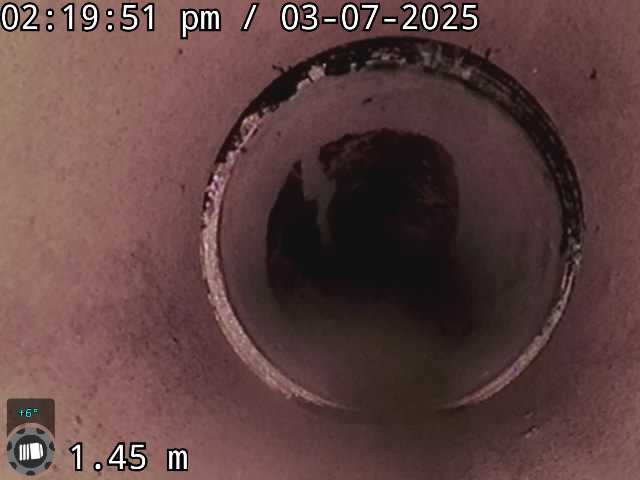 A cleared section of the same Massey line on the follow-up camera check the next day. The photo at the top of this page is the same line before. The joints are still open, which is why it is on a yearly schedule.
If a drain has blocked more than once, clearing it alone is maintenance — you are buying time until the next blockage. Repairing the entry point is the investment that solves it permanently.
What you can and cannot do yourself
Do not pour drain cleaner down a blocked drain. It rarely reaches the blockage, it does nothing to roots, and it makes the problem worse for whoever has to open that pipe and work with caustic chemicals.
Do not use a plunger on a drain that is completely blocked. It will not shift a serious blockage, and it can crack old pipes.
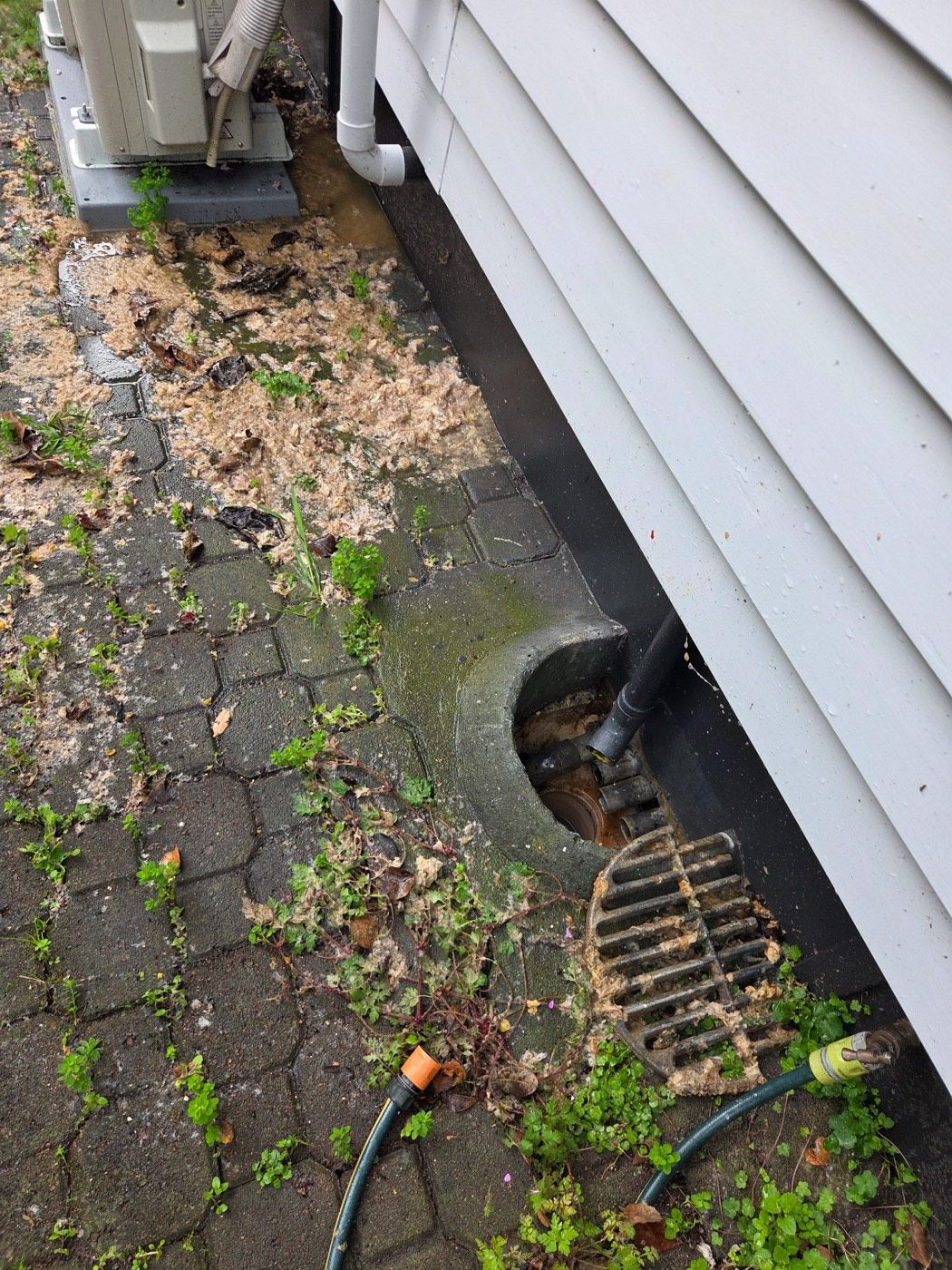 An overflowing gully trap (photo from a different job). If wastewater is coming up here, the blockage is somewhere downstream.
You can clear the gully trap grate outside by lifting it and removing leaves and debris — sometimes that is the whole problem. You can stop putting water down the drain until someone gets there. And you can note whether the blockage happens only when the washing machine drains, or whenever anyone flushes, because that genuinely narrows down where the blockage is.
If the gully is actively overflowing (wastewater coming up out of the grate) stop using water inside completely, because every flush and every wash cycle adds to what is surfacing.
Common questions
Will the roots come back after they are cut?
Yes, if the crack they were entering through is still there. Cutting roots clears the pipe. Repairing or relining the section they were entering through stops them coming back. That is why the camera is not an optional extra — it tells you which option you actually need.
How do I know if it is roots or something else?
Fat, food waste and wipes can block drains without roots being involved. The difference is that fat blockages are usually in kitchen waste lines, food blockages are usually under the sink or at the gully, and wipes usually catch on a lip or tree root rather than blocking the line on their own. Roots block the main drain that serves multiple fixtures. If flushing the toilet and watching water back up in the shower is the problem, the blockage is probably further out than the kitchen. That is where roots usually live.
Can my insurance claim cover this?
Clearing a blocked drain is maintenance and is rarely covered. If wastewater has come up through the floor and damaged flooring, carpets or joinery, that damage may be covered, which is a different thing. Take photos before anything is cleaned up, because your insurer will want them. Repair costs for a failed pipe may be covered depending on your policy — ask your insurer before committing to a relining job.
How long does the fix actually last if I have the joint repaired?
A properly repaired joint under normal circumstances lasts for the life of the house. Roots will find their way back if the repair is poor or if water is still pooling near the line, but a proper epoxy repair with cement cover stops most problems permanently. If we find the whole line is cracked throughout (which happens in old clay pipes), a single joint repair is temporary — the honest answer at that point is that relining or replacing the whole line is the permanent fix.
What if I just clear it every time instead of repairing it?
That is your call. A clearing is the smaller job, but it only lasts until the next blockage. A joint repair is a bigger job up front, and done properly it can last decades. If the blockage is truly a once-in-a-decade occurrence, clearing it makes sense. If it is annual or seasonal, repeated call-outs soon add up to more than the repair.
Related reading
- Blocked drains in Auckland: what is blocked, whose pipe it is, and what happens next
- The gully trap is overflowing: what that actually means
- Who to call for a leak: the council, Watercare, or a plumber
- Basement water problems and what actually fixes them
Tree roots in your drain now? Call Nexus Plumbing on 021 837 775 or email admin@nexuspgd.com. We carry our own CCTV camera, so most jobs get diagnosed on the first visit. Our drainage service covers clearing, camera inspection, and repairs.