
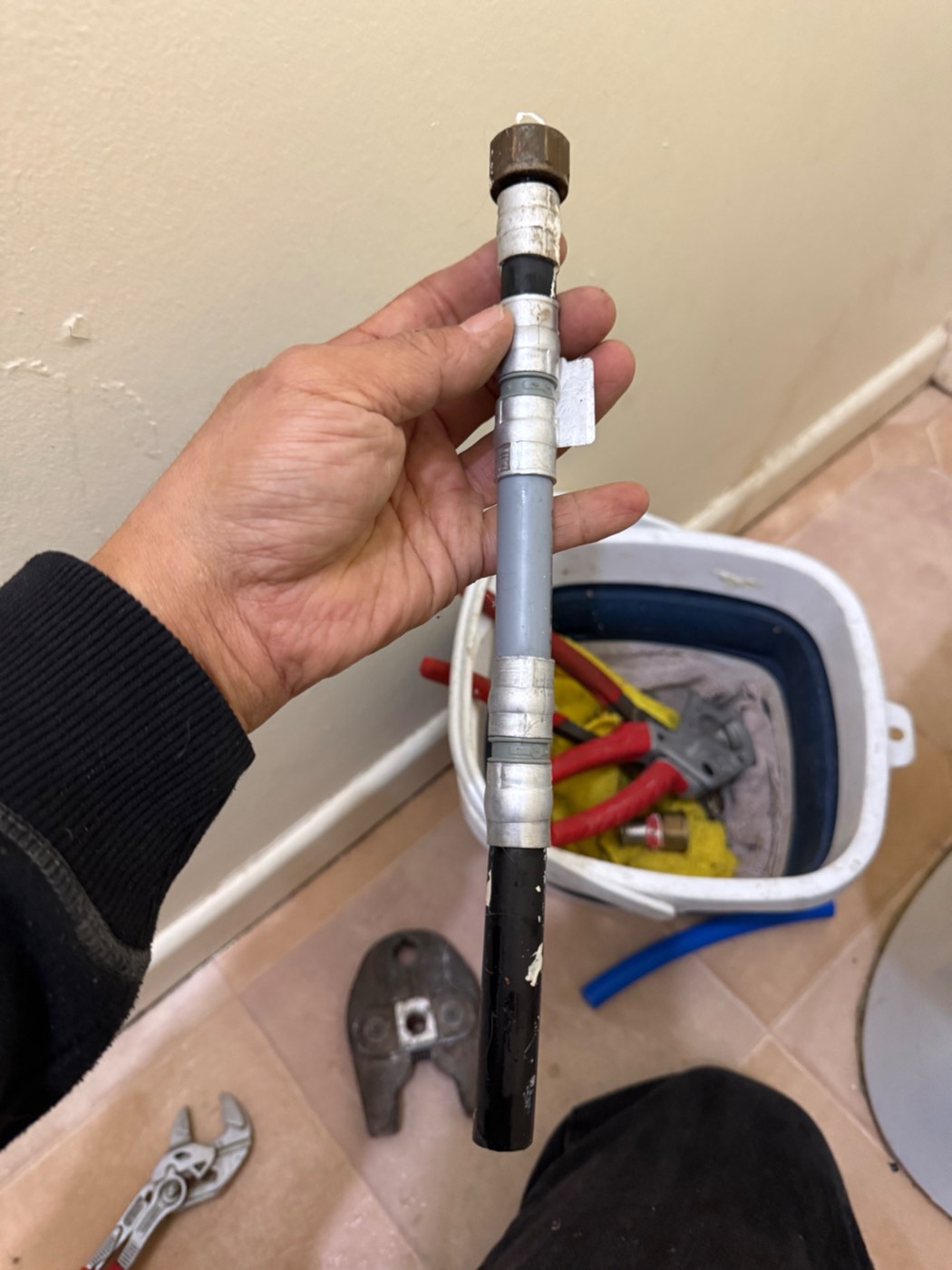
The call we get about Dux Quest is almost never the first one.
It is the second burst, or the third. The owner has already had a plumber out, already had a section cut out and replaced, already had the carpet dried. Then it went again somewhere else, and this time they want to know whether the house is going to keep doing this.
It is. And that is not bad luck. It is the defining property of this pipe, and it is the thing most articles about Dux Quest skip past on the way to telling you to replace it.
What Dux Quest is
Dux Quest was one of the first polybutylene plumbing systems sold in New Zealand, introduced in the early 1980s. It was cheap, quick to install and did not corrode the way galvanised steel did, so it went into new houses and into a lot of re-plumbs of older ones. By the late 1980s it was failing widely enough to make the news, and the manufacturer withdrew it and offered to cover replacement material. Somewhere between 20,000 and 40,000 New Zealand homes are still plumbed in it.
The material does not rust, because it is a plastic. What it does is go brittle. Chlorine in the town supply attacks the polymer and the acetal fittings over time, and the pipe slowly loses the ability to flex under pressure. It gets there quietly, over decades, with nothing visible on the outside.
Two things follow from that, and they are the whole story.
Why one house keeps bursting
Every metre of it is the same age, and has had the same water through it.
A copper pipe fails where something specific went wrong: a bad joint, movement, an electrolysis problem at one fitting. You fix that spot and the rest of the house is genuinely fine, because the rest of the house did not have that problem.
Dux Quest is the opposite. The section that split is not the bad one. It is simply the first one to reach the end of a process that every other run in the house has been going through at exactly the same rate. Replacing it does not make the rest of the house safer. It removes the current weakest point and promotes the next one.
We watched this happen in real time at a rental in West Harbour. The mains had been shut off before we arrived because the tenant could not stop the water. We replaced the failed section, turned the supply back on, and a different run let go. What we wrote to the owner that day was that this is a chain reaction, that the remaining Dux Quest cannot take the pressure coming into the house, and that the sections we had not replaced would go too.
At a single-bathroom house in Massey the pipe burst three times in one year. By the third time the bathroom floor and walls were destroyed. The owner was not calling us about a plumbing fault any more. They were calling because they wanted it to stop.
And restoring pressure is itself a trigger. Turning the water back on after a repair puts a surge through pipe that has spent forty years losing its flex. This is why the second failure so often arrives days after the first, rather than years.
The part that costs real money: your insurance
This is where the repeat failures stop being an inconvenience.
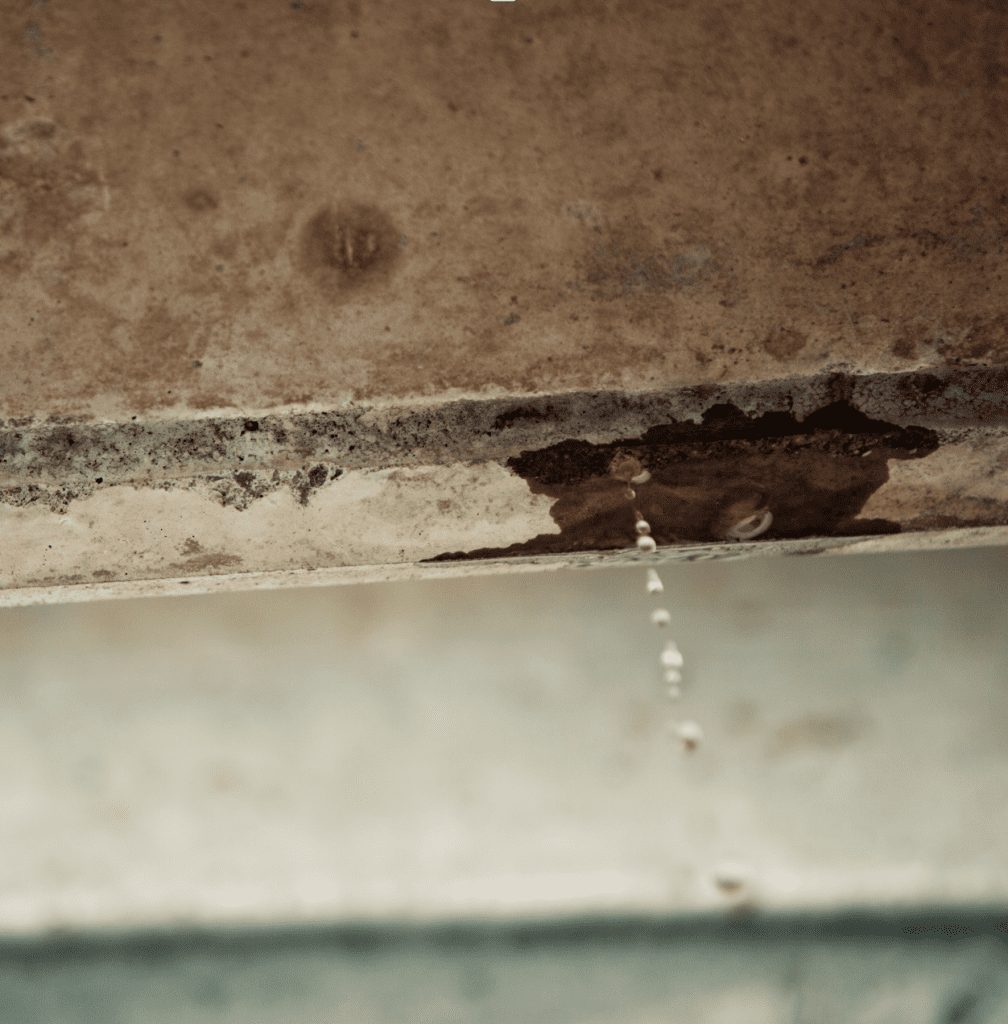
When a pipe bursts suddenly, the resulting damage to floors, walls and contents is normally covered as accidental damage, while the plumbing repair itself sits with you. That is the usual shape of it for a first event.
The second one is a different conversation. Insurers in New Zealand treat known-defective pipework differently from an ordinary burst, because once you know the house is plumbed in Dux Quest, the next failure is not really an accident. It is a maintenance item that was predicted. Some policies say so in the wording, some insurers ask about it at renewal, and cover for a repeat leak in a Dux Quest house is common ground for a decline.
So the honest way to think about a Dux Quest burst is that you have probably just used the one claim you were going to get. What you do between now and the next failure decides whether that one lands on the insurer or on you.
If you know you have this pipe, ring your insurer and ask specifically what happens on a second leak, and get the answer in writing. Do it before something happens, not after. We have written a lot of reports for these claims, and the sentence that matters most in a plumber’s report is rarely the one owners expect.
How to tell if your house has it
Start with the age. Houses plumbed or re-plumbed from the early 1980s through to the end of that decade are the ones at risk.
Then get a torch. Look under the house, in the ceiling space, and in the hot water cylinder cupboard, which is often where a length of it is visible.
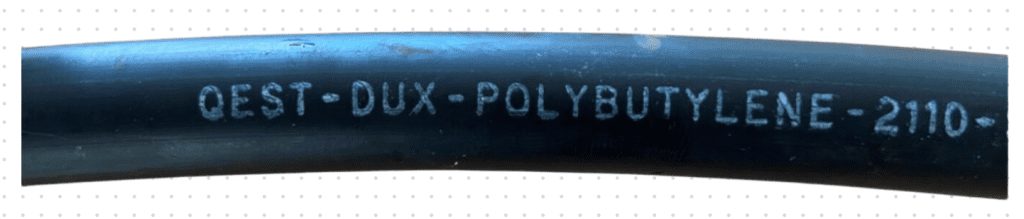
Read the pipe, do not judge the colour. Dux Quest was supplied in black and in grey, and the name is printed along it. Grey is not a reason to relax. The failures we have attended most recently were grey.
If you find any, assume the rest is the same unless you can actually see otherwise.
”The previous owner already replaced the pipes”
Check what they replaced, because this is the most expensive misunderstanding in the whole subject.
It is common for an owner to replace the easy runs, the ones under the house and in the garage ceiling, and leave the pipe inside the walls, because the walls are where the cost is. From the crawl space it looks like a re-piped house. Behind the gib it is still a Dux Quest house.
That version is worse than doing nothing, and the reason is uncomfortable. You have removed every section that would have failed somewhere visible and cheap, and kept every section that will fail inside a wall or a ceiling, where it costs a plumber, a builder and a painter instead of a morning. We put exactly that in writing to an owner in Mairangi Bay after a burst in the garage ceiling, and the two failures that came afterwards were both elsewhere in the house.
If you are buying, ask for the invoice, and ask specifically whether the wall runs were included.
Repair the burst, or re-pipe the house?
Re-pipe, and we will tell you that even on a job where the repair is all you asked for.
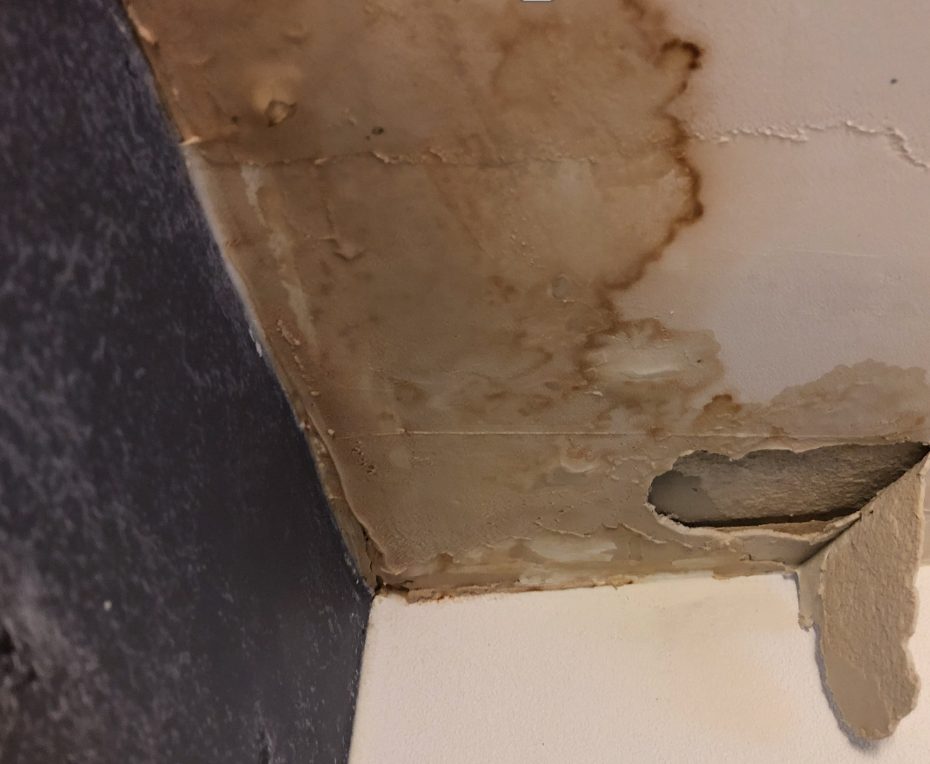
A repair buys you the use of the house tonight. That is a real thing and sometimes it is all that is available this week. But it does not change the risk anywhere else in the building, and the sentence that goes on nearly every one of these invoices is the same: the remainder of the property is plumbed in the same pipe, which is past its service life and can split again without warning.
Staging it is fine. For a lot of households it is the only realistic answer. Do the hot lines and the cylinder cupboard first, because heat and pressure together are harder on this material than cold water is, and hot runs and cylinder cupboards tend to go first. Then the bathrooms. Then the rest.
What you want to avoid is opening and closing the same wall twice.
The cheapest time to do it is while the walls are open
The plumbing is not the expensive part of a re-pipe. Opening linings and putting them back is, and that cost does not care whether the wall was opened for plumbing or for anything else.
We replaced the Dux Quest through a house in Hillcrest covering three bathrooms, the kitchen and the laundry in one go, because the house was being worked on anyway. On a kitchen job in Glendowie the Dux Quest in that area came out as a variation while the room was already stripped. That is the ideal version of this job: the pipe goes, and nobody pays twice for the same wall.
There is a sequencing point here too. At a house in Massey the owner wanted a hot water cylinder upgrade. We told them the Dux Quest had to come out first, because there is no sense putting a new cylinder onto pipework that cannot hold the pressure it will be asked to hold.
So if a bathroom or kitchen renovation is anywhere in your plans, bring the pipework forward and do it in the same opening.
Common questions
Is Dux Quest the black pipe or the grey pipe?
Both. It was supplied in black and in grey, and the grey is the one people miss. Go by the name printed along the pipe.
My house was built in the 1990s. Am I clear?
Almost certainly for original plumbing, since it was off the market by then. But a 1950s or 1960s house re-plumbed during the 1980s is squarely in range, and those are easy to overlook because people check the build date rather than the re-plumb date.
It has not leaked in forty years. Does that mean mine is fine?
No, and this is the hardest part of the subject to accept. There is no gradual warning stage with this material. It does not weep before it splits. A house with no history of leaks is a house where the first one has not happened yet.
Can I just replace the bits I can reach?
Please do not. See above. Removing the accessible runs and leaving the wall runs guarantees that the next failure happens in the most expensive possible place.
Does it affect selling the house?
Yes, and more every year. Building inspections pick it up, buyers ask for it to be replaced or for the price to reflect it, and a number of sellers now get a replacement quote before listing so the conversation is about a known number rather than an open risk.
What goes in instead?
PEX or Buteline, depending on the house and the layout. Both are current-generation systems with a long service life and neither has the failure mode this pipe has.
Related reading
- Re-piping a house: when repairs have stopped being the answer
- A pipe has burst: what to do in the first ten minutes
- Is your leak covered? The insurance mistake to avoid
- The plumber’s report: one sentence matters more than the rest
- Water leaks in Auckland homes: how to find one, and what happens next
- Where is my water meter box, and what if the valve will not turn?
If your house still has Dux Quest, the question is when rather than whether. Our leak detection service finds the current failure, and we can tell you honestly whether it is worth repairing again. Call 021 837 775.