
Most leaks do not announce themselves. They turn up as a water bill that makes no sense, a musty smell in a room, a warm patch on the floor you keep walking past. By the time water is visibly running somewhere, it has usually been going for a while.
This is the page we send people to when they are not sure what they are dealing with. It works through the questions in the same order we would on a real job, and points you at the detail for whichever answer you land on.
The three questions that sort almost every leak
Before anyone opens anything, these three answers narrow it down more than any equipment does.
1. Is the water clean or dirty? Clean means the supply side, the pipes bringing water in under pressure. Dirty or smelly means waste, which is a different set of pipes and a different repair.
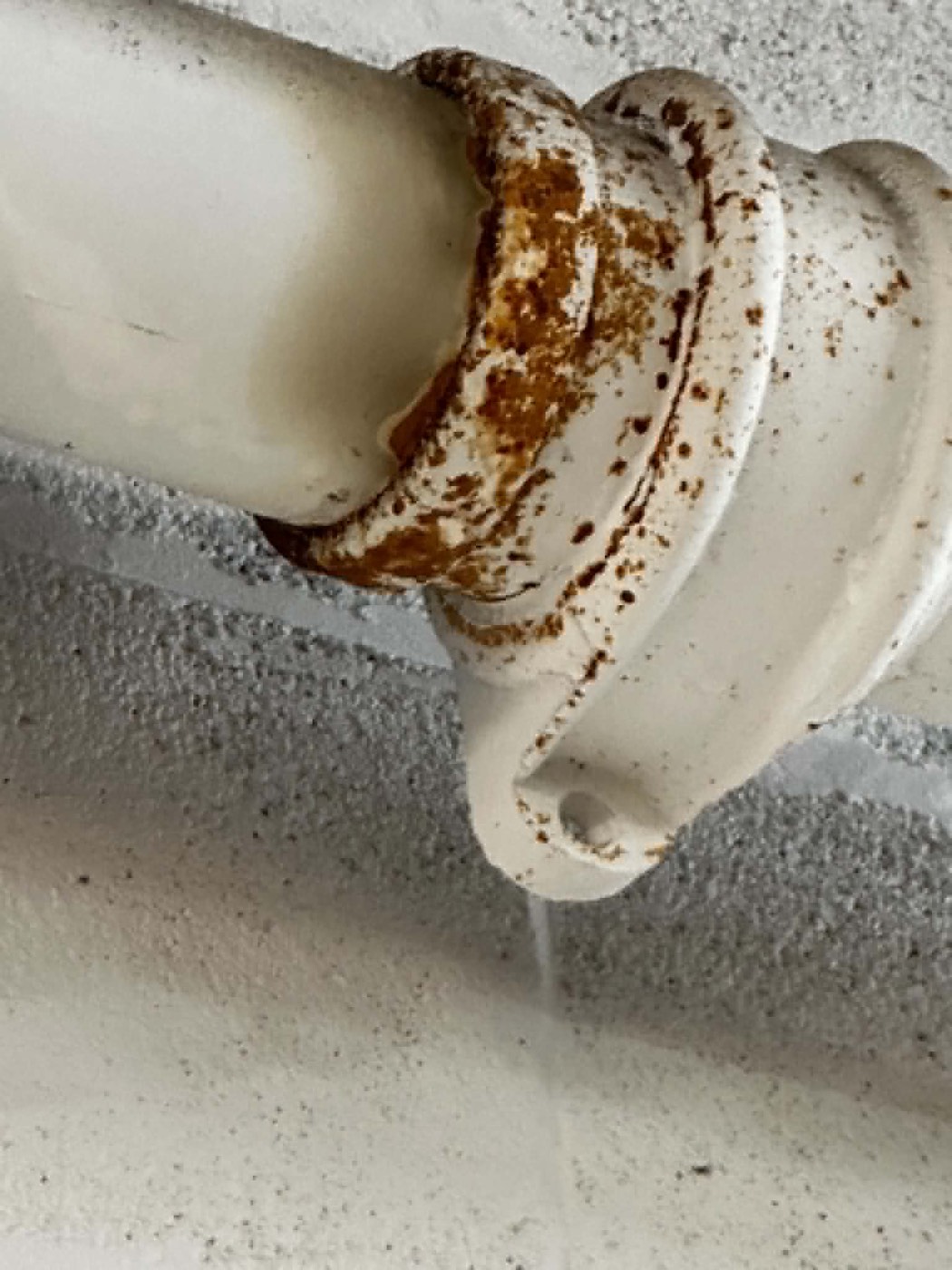
2. Is the meter moving with everything turned off? A moving meter proves water is escaping from the pressurised side. A still meter does not prove the opposite: a slow concealed weep may not register at all, which we found on a Takapuna ceiling job where the meter sat completely still and there was still a corroded fitting inside the wall.
3. Is it wet all the time, or only after you use something? Constant means supply, because a pressurised pipe never takes a break. Only after a shower, a sink or a washing machine means waste, or waterproofing.
Write the answers down. Handed to a plumber over the phone, those three lines are worth more than a paragraph of description.
Where is the water showing up?
Different symptom, different starting point. Find yours here.
| What you are seeing | Usually | Read this |
|---|---|---|
| Water running now, cannot stop it | A burst supply line or fitting | The first ten minutes of a burst |
| Cannot find where to turn the water off | The valve in the meter box, or one at the cylinder | Where is my water meter box? |
| Water bill has jumped or crept up | A hidden leak, or usage | High bill: leak or not, and claiming it back |
| Wet patch on lawn, berm or driveway | The buried main, or just drainage | Wet ground and underground leaks |
| Water in the cabinet under a sink | Supply tails, or the waste and trap | Water under the sink |
| Stain on a ceiling | The bathroom above, the roof, or condensation | A water stain on the ceiling |
| Water on a bathroom floor spreading out the door | Often not a leak at all | Never pour water on a bathroom floor |
| Braided hose weeping behind a fixture | A flexi hose reaching the end of its life | Flexi hoses |
| 1970s or 80s house, pipe split with no warning | Dux Quest polybutylene | Dux Quest |
| Fittings failing repeatedly, worse overnight | Unrestricted water pressure | Water pressure and why it peaks at night |
Start with the meter, always
Turn off every tap and water using appliance in the house, find the meter at your front boundary, and watch it for a minute.
Numbers moving with everything off means water is leaving your pipes. Numbers still means no active leak on the pressurised side right now, and a damp patch with a still meter points at drainage or stormwater instead.
There is a step by step version with photos, including which digits matter and how to work out how many litres a day you are losing. It is the most useful five minutes a homeowner can spend on their plumbing.
High water bill with nothing visible
The most common way people find a leak, and close to word for word the phrase they search. If the meter confirms movement, the water is going somewhere you cannot see. In Auckland homes, roughly in order:
- The buried feed pipe between the meter and the house. Older properties often have galvanised steel or early plastic underground and both fail with age. The lawn may stay green over the leak while the rest browns off in summer.
- Under the floor. Copper and steel fittings corrode quietly in the subfloor. We found exactly that in a Milford villa, running under the house with nothing showing inside.
- A silently leaking toilet. A worn valve trickles from cistern to bowl around the clock. Test it with food colouring: how to.
- The hot water cylinder relief line. A cylinder venting continuously onto the roof is a leak you pay for twice, in water and in power. More here.
- Inside a tiled bathroom. Hardest to see, most damaging to ignore. This Takanini job shows how we chase one without pulling the room apart.
Whose leak is it: yours, Watercare’s, or the council’s?
The boundary is the meter. Street side belongs to Watercare, your side is yours even if the wet patch is out near the footpath.
If no water is being used in the house but the water meter is still moving, that generally means water is leaking after the meter, on the property side, so it is the homeowner’s responsibility.
If the meter is not moving, but there is a water puddle or persistent wet area around the meter, berm, footpath or roadside, the leak may be before the meter on the Watercare side. Watercare can be reached on 09 442 2222.
We have written a plain guide to who owns what, including stormwater, groundwater and sewer overflows, so you do not spend an afternoon being transferred between call centres.
The part almost nobody knows: the leak allowance
If a hidden leak has inflated your bill, Watercare has a leak allowance. Once the leak is repaired you can apply to have part of the lost water credited back, with evidence that it existed and has been properly fixed. That is what the plumber’s report is for.
We do this routinely and put the details on the invoice when a job qualifies. If we fix your leak, ask for the report. Writing it is part of the job, not an extra. How the allowance works.
What if it is inside a wall or under concrete?
From this point, finding exactly where the leak is becomes an important part of the job. Opening the wrong wall can be expensive and creates unnecessary repair work.
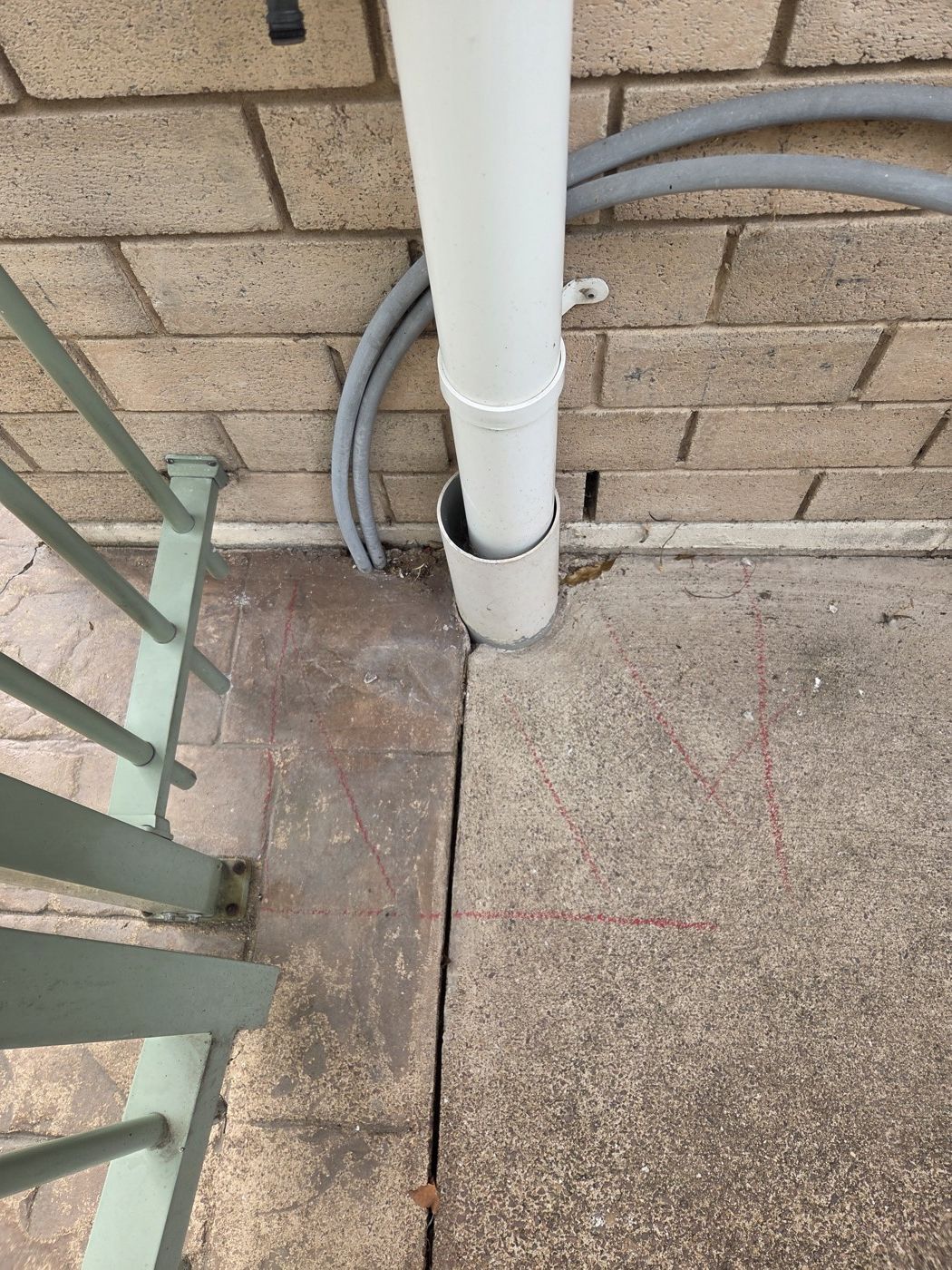 Marking the likely leak position on concrete before anything is cut, from another job.
Will insurance cover it?
Often yes for sudden damage, much less often for the slow drip that ran for months, and the difference matters enormously. Before assuming either way, read the mistake that gets leak claims declined.
Worth deciding deliberately rather than by reflex: a small repair may cost about what your excess does, and a claim sits on your record at renewal. Serious wetting, where carpet has to be dried and ceilings rebuilt, is exactly what the cover is for. Either way, photograph everything before it is cleaned up and get the leak documented. Our reports are written knowing an assessor will read them.
Common questions
How do plumbers actually find hidden leaks?
Process of elimination in a deliberate order: meter check to confirm, isolating valves to narrow the zone, pressure tests on each line, then temperature and moisture readings to pinpoint. Equipment helps, but the sequence is what saves your walls. Nobody finds every leak first time, and anyone who promises to is selling something.
My meter moves only slightly. Can I ignore it?
A slow leak does not stay slow. Water finds the same path every day and the path gets bigger. Slight movement with everything off is worth a phone call this week rather than this year. One caveat: a hot water cylinder heating up can move the meter a little on its own, so if the movement is very slow, check again in an hour or two before assuming the worst.
How long does a leak repair take?
A visible failure at an accessible fitting is often the same visit. A concealed leak is normally two stages, an investigation and then a repair, sometimes on different days, and the investigation is charged even though it has not fixed anything yet. Putting linings back afterwards is building work and comes from a builder, not from us.
Is it cheaper to repair or to replace the pipe?
It depends on what the pipe is and how easy it is to reach. A modern line with a confirmed leak location is a repair. Old galvanised, or Dux Quest, or a deep buried main nobody can pinpoint, usually costs less to replace than to keep chasing, because each chase involves detection, excavation and making good. We will give you the arithmetic on both before you commit.
Related reading
- The garden tap is leaking, or is it?
- Birkenhead: a shower mixer leaking inside the wall
- Re-piping a house: when repairs have stopped being the answer
- A plumber’s guide for property managers: triage, access and reports
- How we actually find a hidden leak, and what each stage costs
- The gully trap is overflowing: what that actually means
- A leak under concrete: how it shows up and what it costs to reach
- Water under the hot water cylinder: four things it could be If water is running right now
- A pipe has burst: what to do in the first ten minutes
- Where is my water meter box, and what if the valve will not turn?
Working out what you have
- The one minute meter check, step by step
- Who to call: council, Watercare, or a plumber
- Your water bill has doubled: is it a leak, and can you claim it back?
By where it is leaking
- The ground is wet and nobody knows why: underground leaks
- Water under the sink: working out which pipe it is
- A water stain on the ceiling: bathroom above, roof, or something else?
- Takanini: chasing a shower leak in a tiled bathroom
- Milford: a leak under the house
- Main water leak: identifying and fixing it
Why it happened
- Flexi hoses: the quiet cause of most household water damage
- Dux Quest: the hidden water bomb in 1970s and 80s houses
- Water pressure in Auckland homes, and why it is highest at night
- Never pour water on a bathroom floor in New Zealand
Paying for it
- Is your leak covered? The insurance mistake to avoid
- Water damage insurance claims in NZ: what the plumber sees
- The plumber’s report: one sentence matters more than the rest
- The pump will not stop: a tank water job in Kumeū
If your meter is moving and it should not be, call us or get a quote. Same day response across Auckland, and the meter check advice is free either way.
This guide covers finding it yourself. When it is past that point, our leak detection service picks up where the meter check stops. Call 021 837 775.