
A tenant out west rang their property manager to say the power bill had jumped and the water pump under the house sounded like it never stopped. Nothing was running inside. No wet floors, no dripping taps, no stains on the ceiling. On tank water there is no meter to look at, so the only evidence anyone had was a pump that kept kicking in and a bill that kept going up.
We went out, checked through the house, and found nothing visible. A pump that cycles with every tap closed means water is going somewhere, so the honest call at that point was an underground or concealed leak, and the property manager approved leak detection.
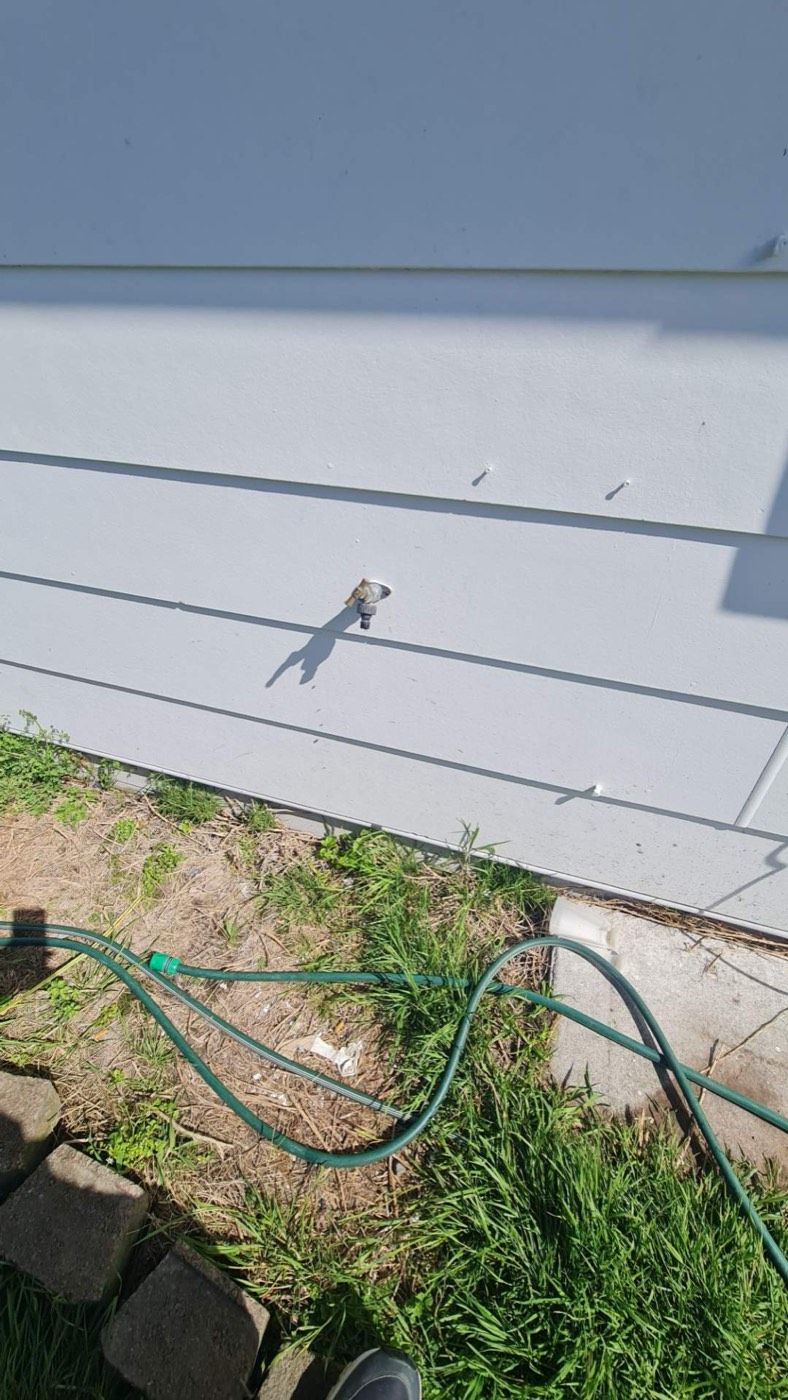
The detection technician found it in under an hour. The outside hose tap on the side of the house was open, with the garden hose still screwed on. The water was running quietly down the hose and soaking into the ground several metres away, so there was nothing to see at the tap itself. Close the tap, and the pump stopped. No repair, no excavation, no broken pipe.
Why does my water pump keep running?
A pressure pump switches on when the pressure in the pipework drops, which normally means someone opened a tap. If nothing is open and the pump still runs, pressure is dropping on its own, and there are only a few reasons for that.
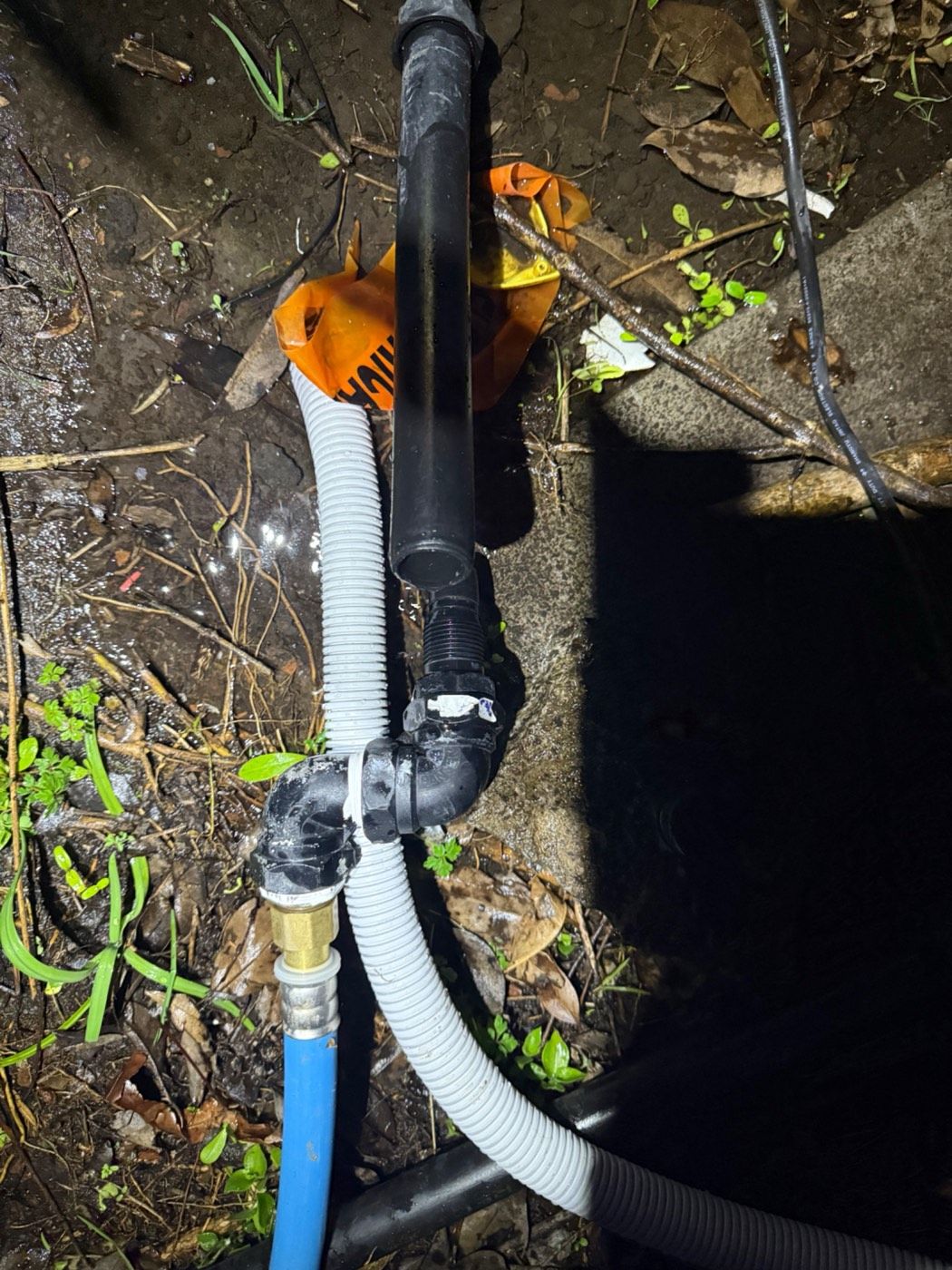
Water is escaping somewhere on your side of the pump. A fitting, a toilet cistern, a pipe under the house or under the ground. Or the pump itself has lost its ability to hold pressure, usually a failed non return valve or a waterlogged pressure tank, which makes the pump start and stop every few seconds even with no water moving at all.
Those two sound the same from the hallway but they are very different jobs, and the difference matters before anyone starts quoting.
Does a running pump always mean a leak?
No, and this job is the reason we say so. An open tap is not a leak. Neither is a toilet that is quietly running into the pan, or a hose left on a sprinkler, or a trough float that has stopped shutting off.
The pump cannot tell the difference. It only knows that pressure keeps falling, so it keeps running, and it will happily do that day and night. On a tank water property that also empties the tank, which is why people on bore or roof water often notice the water level dropping before they notice the noise.
What should I check before paying for a plumber?
This is the part that saves money, and it costs you nothing but a walk around the property.
- Every outside tap, including the ones round the back and at the shed. If a hose is connected, follow it to the end. Water running out of a hose in long grass is silent and invisible.
- Every toilet. Put a folded piece of toilet paper on the back of the pan below the rim and leave it ten minutes. If it is wet, the cistern is leaking through.
- Irrigation and garden lines, sprinklers, animal troughs and any header tank with a float valve.
- The hot water cylinder and its overflow pipe outside. A relief valve that is passing sends water down the drain constantly.
- The pump itself. Listen to the rhythm. Short bursts every few seconds with nothing running usually means the pump, not the plumbing.
If all of that is clear and the pump still cycles, then you have a real leak and it is worth paying someone to find it.
Why did the first visit not find it?
Because water leaving through a connected hose does not behave like a leak. There was no spray, no puddle, no hiss at the tap. The wet ground was well away from the house, where you would look for a garden problem rather than a plumbing one.
The technician worked the other way round. He looked for the wettest ground on the property first, found saturated soil in an odd spot, and followed it back. The hose ran to the tap, the tap was open, and that was the whole story.
What does a pump running all day actually cost?
A typical domestic pressure pump draws somewhere around 0.7 to 1 kilowatt. Running more or less continuously, that is roughly 17 to 24 kilowatt hours a day, which on current Auckland retail rates lands somewhere near five to seven dollars a day in power alone.
Over a month it is the sort of number that makes a tenant pick up the phone, which is exactly what happened here. On tank water you also pay for the water twice over if the tank runs dry and has to be filled by tanker.
The lesson worth keeping
Find out where the water is going before you spend money on fixing it. The order matters. A morning spent walking the property with the taps off tells you more than a guess, and it is the cheapest hour anyone will spend on the job.
When it genuinely is hidden, detection is money well spent, and the bill for finding it is far smaller than the bill for digging in the wrong place. If your pump will not settle and you cannot work out why, call us or send a photo by text and we will tell you what to check first.
Common questions
My pump clicks on and off every few seconds. Is that the same problem?
That pattern usually points at the pump rather than a leak. Most pressure pumps sit behind a small pressure tank with an air cushion in it, and when that cushion is lost the pump has nothing to buffer against, so it cycles rapidly every time water moves. A failed non return valve at the pump does something similar by letting pressure bleed backwards. It is worth sorting quickly, because rapid cycling wears a pump out fast.
We are on tank water and have no meter. How do you prove there is a leak?
The pump is the meter. Close every tap inside and outside, then watch and listen. If the pump starts at all over the next half hour, water is leaving the system somewhere. Marking the tank level with tape and checking it again in the morning gives you a second reading, and if the level drops overnight with nothing in use, that is as good a confirmation as a meter dial turning.
Is the tenant or the owner responsible for a bill like this?
Where a tap has simply been left open, the fault is use rather than a plumbing failure, and how the cost falls is a conversation between the owner, the property manager and the tenant rather than something we decide. What we can do is give a clear report saying what was found, what caused it and whether a repair was needed, so everyone is working off the same facts. In this case nothing was broken and no repair was charged.
Can leak detection find a leak on tank water, or does it need mains pressure?
It works on pump systems too. Acoustic detection listens for the sound of pressurised water escaping, and a pump running holds pressure in the line just as a mains connection does. The technician will usually isolate sections and watch how the pump behaves as each one is cut out, which narrows the search before any listening starts. Deep pipe and absorbent ground are still the hard cases, on tank water or town supply.
How do I stop this happening again?
Disconnect the hose at the tap when you have finished with it, rather than leaving it connected and relying on the trigger nozzle at the far end. Nozzles and connectors weep, and with a hose attached you cannot tell from the house whether a tap is open or shut. If a tap is in a spot where it gets knocked or where children play, a lockable tap head or a simple isolating valve inside the line is cheap insurance.
Related reading
- The garden tap is leaking, or is it?
- How we actually find a hidden leak, and what each stage costs
- The ground is wet and nobody knows why: underground water leaks
- Your water bill has doubled: is it a leak, and can you claim it back?
- A plumber’s guide for property managers: triage, access and reports
- Water leaks in Auckland homes: the full guide
A pump that will not stop is telling you there is a leak somewhere, and tank properties hide them well. We work across Kumeu and the north west. Call 021 837 775. Our leak detection service covers tank and pump systems as well as mains.