
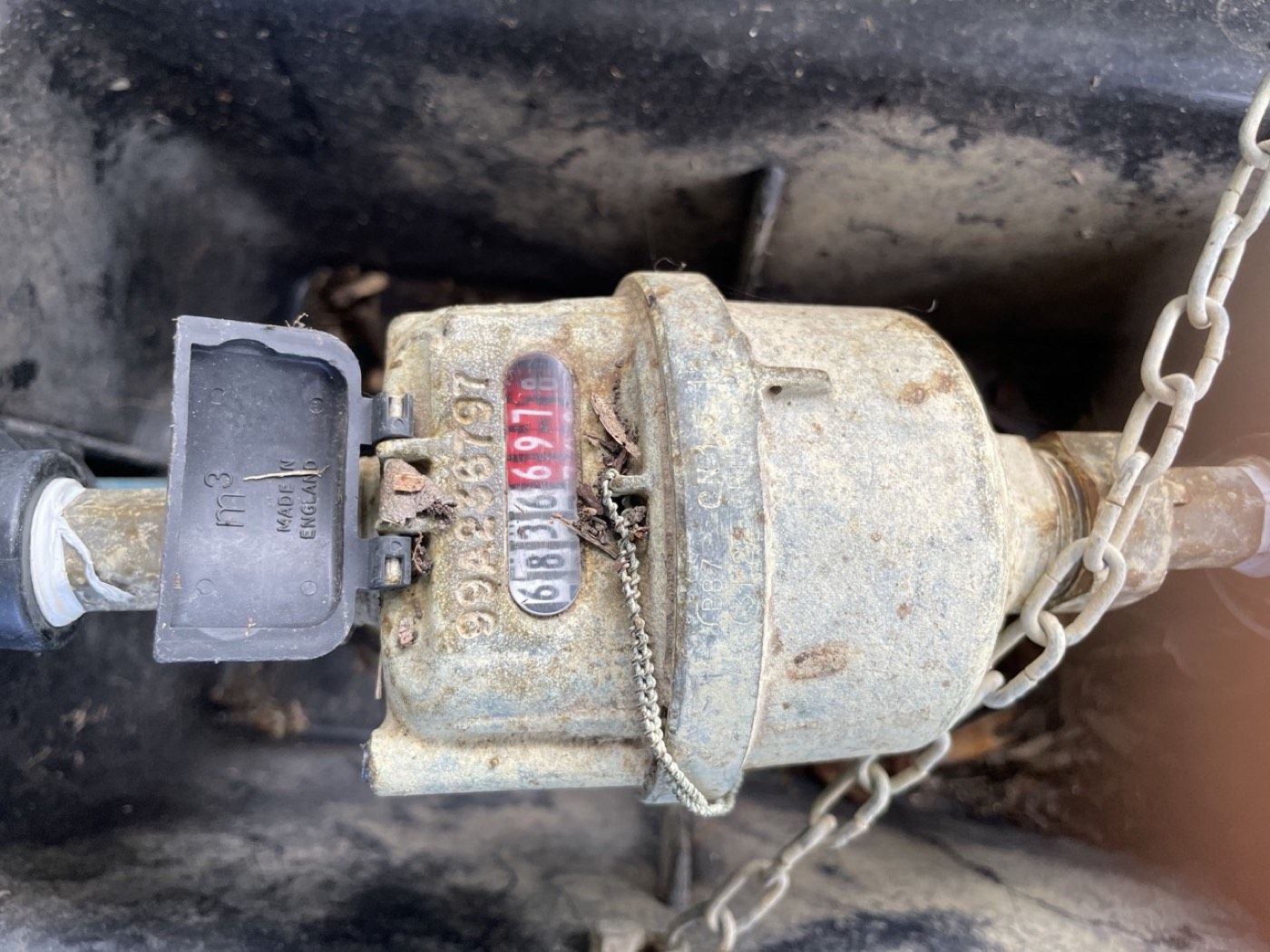
This is the first thing we ask anyone to do, and it is the only leak test that costs nothing and takes a minute. It tells you whether water is escaping from the pressurised side of your plumbing, which decides almost everything that happens next.
Do it once a season even when nothing looks wrong. Most of the expensive leaks we attend had been running quietly for weeks.
Step 1: find the meter
It sits in a plastic box in the ground near your front boundary, usually within a metre or two of the letterbox. Lids are commonly blue or black, and blue ones often have WATER METER moulded into them.
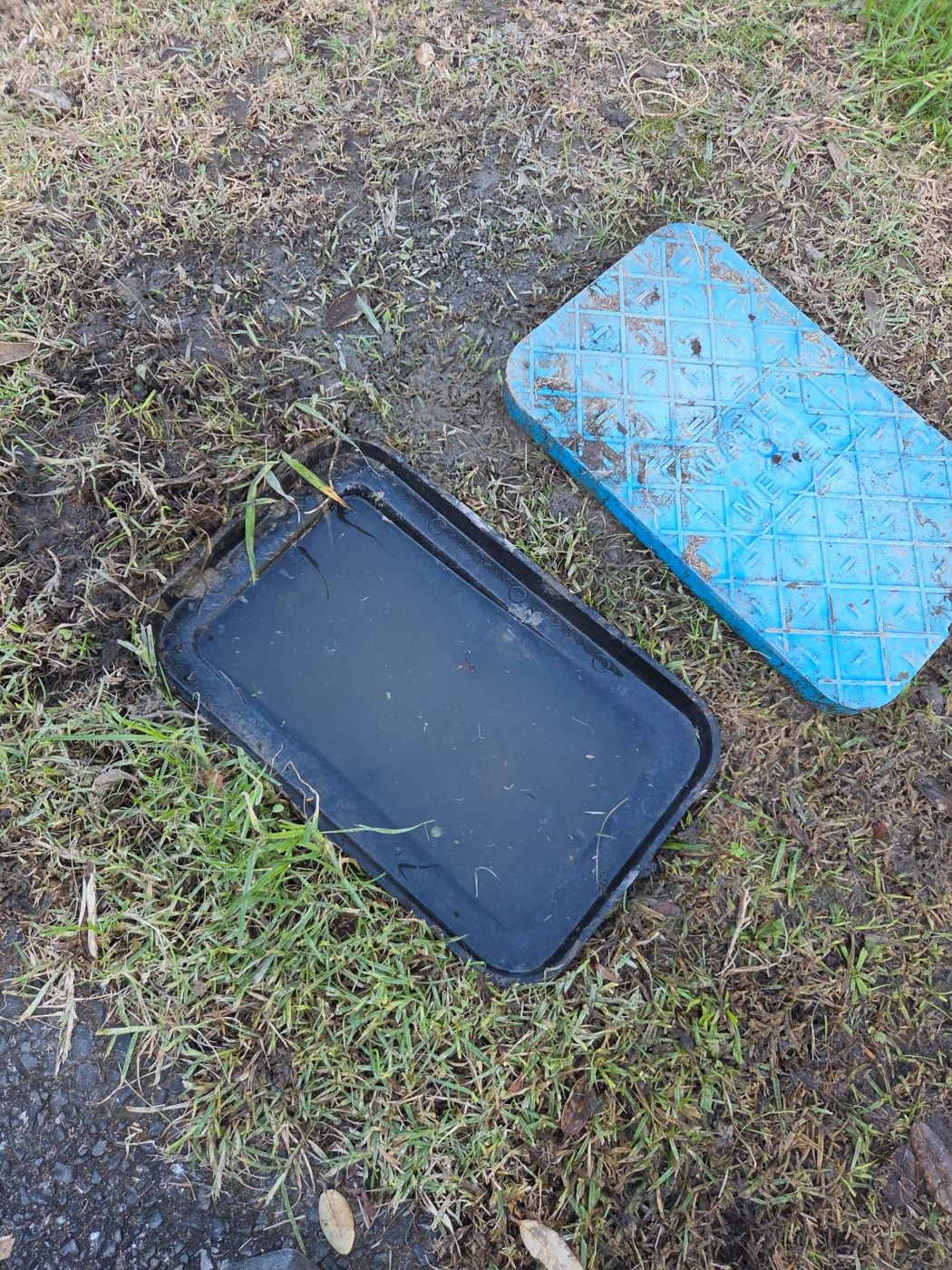
If you cannot see a lid, feel along the boundary line for a hard flat edge underfoot. They get buried under lawn, bark, hedges and widened driveways.
Townhouses and apartments are different. Your meter may be in a shared bank of them, in a riser, or in a common area, and sometimes several dwellings share one. If you cannot find yours, ask the body corporate or building manager rather than guessing, because shutting the wrong one affects your neighbours.
Step 2: turn everything off
Everything means everything, inside and out.
Taps in the kitchen, bathroom and laundry. The washing machine and the dishwasher, including a cycle you forgot was running. Every garden tap, and any irrigation on a timer. Ask whoever else is home not to flush anything for the next few minutes, because one flush invalidates the whole test.
Step 3: open the lid and clear the box
The lid can be stiff. Use a screwdriver or a sturdy rod at the edge rather than forcing it with your fingers.
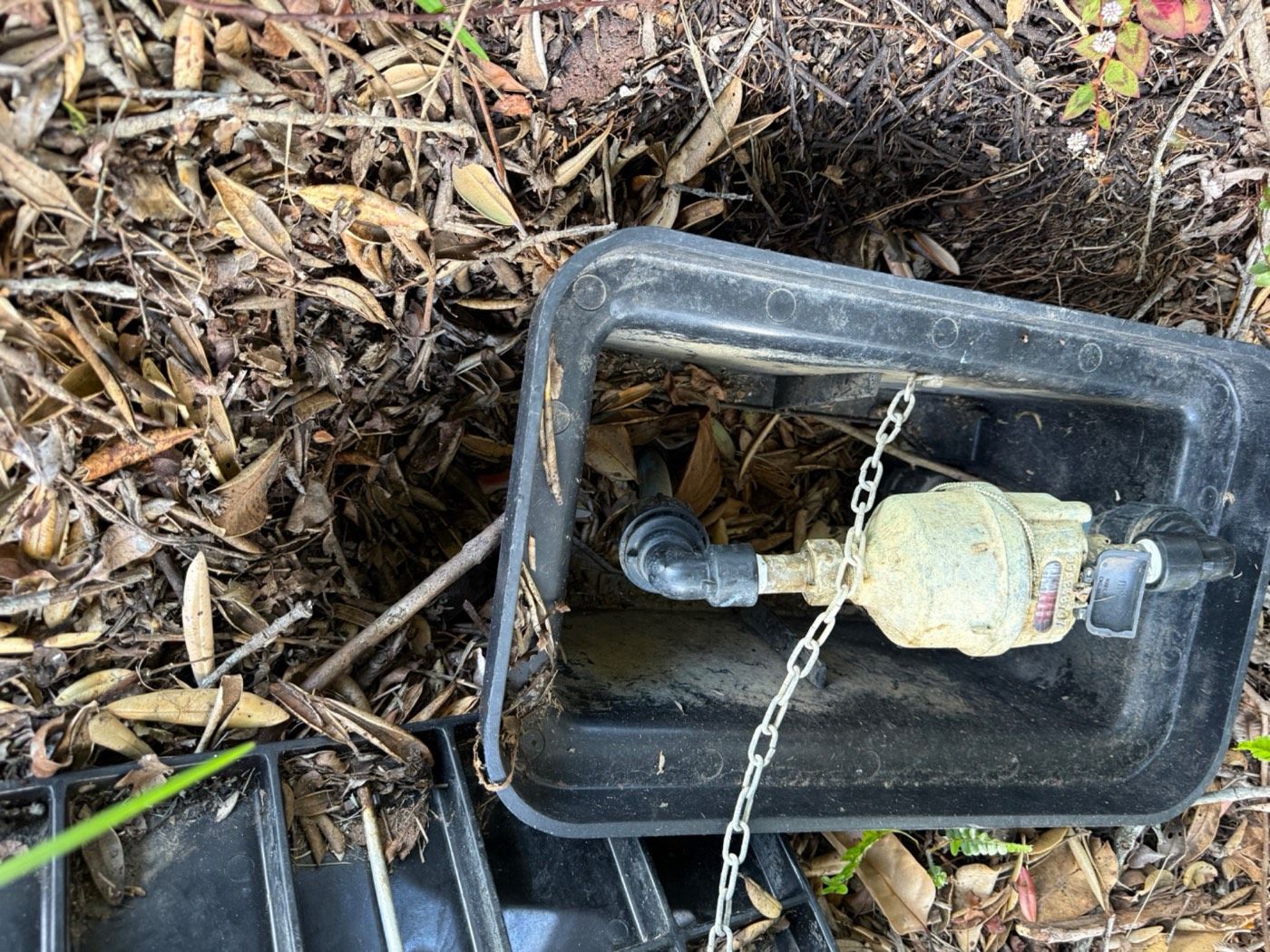
There is often water and silt in the box, which is normal and not itself a sign of a leak. These boxes have no bottom, so soil washes in and rain sits in them. Scoop enough out to read the numbers.
Step 4: read the dial
There are two sets of digits and they do different jobs.
- Black numbers on white are cubic metres, in other words thousands of litres. This is what Watercare bills you on. They move slowly and are no use for a one minute test.
- Red numbers on white, or white on red are litres. These are the ones to watch. The last digit is a decimal place.
So the red digits are your leak detector. A change of ten on them over a minute means roughly ten litres a minute leaving your pipes.
Step 5: watch for one minute
Set a timer. Note the red digits at the start and again at the end.
Numbers moving with everything off: you have a leak. Water is leaving the pressurised side of your plumbing. Work out the rate while you are standing there, because the number is genuinely motivating: two litres a minute is about 2,880 litres a day.
Numbers completely still: no active leak right now. If you still have a wet patch somewhere, the water is coming from drainage, stormwater or groundwater rather than your supply, which is a different investigation entirely.
Numbers moving very slowly: wait and repeat. A hot water cylinder heating and expanding can nudge the meter on its own, so check again in an hour or two before assuming the worst. If it is still creeping with the house untouched, treat it as a leak.
Step 6: work out whose leak it is
The meter is the boundary. Pipework after the meter is on the property side, and pipework before it is Watercare’s.
Meter moving with no water being used: if all water use in the house is turned off and the meter is still moving, water is escaping somewhere after the meter, on the property side. That is a plumber’s job.
Meter still, but water around the meter: if the meter is completely still but a puddle keeps appearing or staying around the meter box, berm, footpath, roadside or just outside the property boundary, there may be a leak on the Watercare side before the meter. A wet area outside does not automatically prove it is a Watercare leak, but if the meter is not moving it is worth asking Watercare to investigate their side on 09 442 2222.
There is more on the boundaries, including stormwater and sewer overflows, in who to call for a leak.
What the result means for you
| Meter result | What it usually means | What to do next |
|---|---|---|
| Moving fast and water is visible | Active leak on the pressurised property-side plumbing | Isolate the water if possible and call a plumber. See the first ten minutes of a burst |
| Moving, but no water is visible | Hidden leak after the meter, such as an underground main, underfloor pipework, toilet cistern or another concealed supply leak | Leak investigation or leak detection. See wet ground and underground leaks |
| Moving and the water bill has increased | Hidden property-side leak | Repair the leak and check whether a Watercare leak allowance may apply. See high bill and the leak allowance |
| Completely still, but a wet patch remains around the property | Could be drainage, stormwater, groundwater, or another non-supply source | Investigate the source. See who to call |
| Completely still, but water keeps pooling around the meter, berm, footpath or roadside | Could be a Watercare-side leak before the meter | Contact Watercare on 09 442 2222 |
| Still, but there is a ceiling stain | Could still be a very slow intermittent leak or another water source | Further investigation is needed. See a water stain on the ceiling |
A note on very deep leaks
Where a buried main has failed more than a metre or so down, acoustic leak detection often cannot pinpoint it, because the soil absorbs the sound before it reaches the surface. On those jobs the practical answer is frequently to install a new main rather than keep excavating to look for the old one, and it can be run in without digging a trench the whole way.
We had exactly that on a Remuera property where two detection visits could not find it and one excavation at the marked spot turned up nothing.
Meter moving and you are not sure why? Call us and tell us the rate you measured. That number alone tells us a lot before we arrive.
Common questions
How much water is a leak actually wasting?
Multiply what you measured by 1,440 to get the daily figure. One litre a minute is about 1,440 litres a day, which is roughly seven baths. Five litres a minute is over 7,000 litres a day. Doing that sum at the meter is usually what turns “I should get that looked at sometime” into a phone call.
Water is sitting in the meter box. Is that the leak?
Usually not. The box has no floor, so rain and groundwater collect in it and stay there. What matters is the dial, not the puddle.
Can I do this test if I am renting?
Yes, and it is worth doing. Finding the box and knowing how to shut the valve is useful in an emergency regardless of who owns the house. If the meter is moving with everything off, tell the property manager and say you have done the test, because that turns a vague report into something actionable.
The meter is under a locked cover or I cannot get to it
Some are under driveways, in shared banks, or behind a body corporate’s lock. Ask the building manager, or ring Watercare and ask where your point of supply is. Do not break anything open to reach it; the meter is Watercare’s property.
My meter has a small spinning dial rather than red digits
Older meters often have a little star or triangle that spins with any flow at all, and it is even more sensitive than the digits. If that is rotating with everything shut off, water is moving. Use it the same way: watch it for a minute with the house quiet.
Related reading
- How we actually find a hidden leak, and what each stage costs
- A leak under concrete: how it shows up and what it costs to reach
- Water leaks in Auckland homes: the full guide
- Where is my water meter box, and what if the valve will not turn?
- Who to call: council, Watercare, or a plumber
- Your water bill has doubled: is it a leak, and can you claim it back?
- The ground is wet and nobody knows why: underground leaks
- A pipe has burst: what to do in the first ten minutes
If the dial is moving, the next step is finding where. That is our leak detection service. Call 021 837 775.