
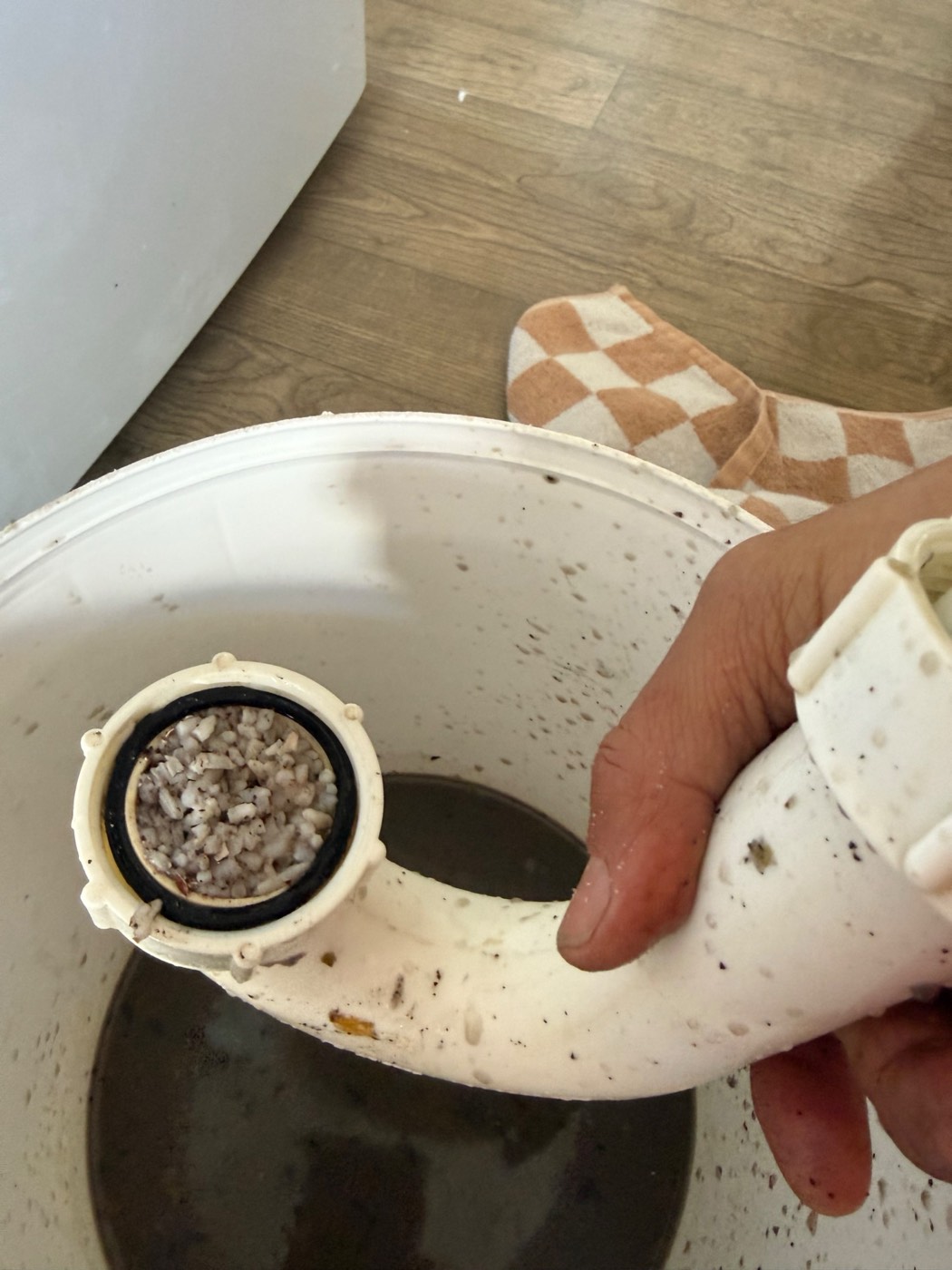
A household in Forrest Hill called because the kitchen sink would not drain. The waste disposer still spun when it was switched on, but the water just sat in the bowl. When we took the trap off under the sink, the inlet was packed solid: hundreds of small pieces of ground-up food, every one of them ground exactly as the disposer is designed to, held together by grease. We cleared the line, fitted a new trap and the sink drained properly again. The whole visit took under an hour.
That is the version of this problem we see most. The disposer gets the blame, but the blockage is in the pipe below it.
Why does a sink with a waste disposer block up?
A disposer does not make food disappear. It grinds it into small pieces and sends them down the same 40mm waste pipe the sink always had. That works while the pipe is clear.
The trouble is that kitchen pipes are rarely clear. Fat, oil and butter from washing dishes coat the inside of the trap and the pipe after it, a thin layer at a time, over years. Ground food that would wash straight through a clean pipe catches on that coating instead. The pipe narrows, then a bit more catches, and eventually it closes.
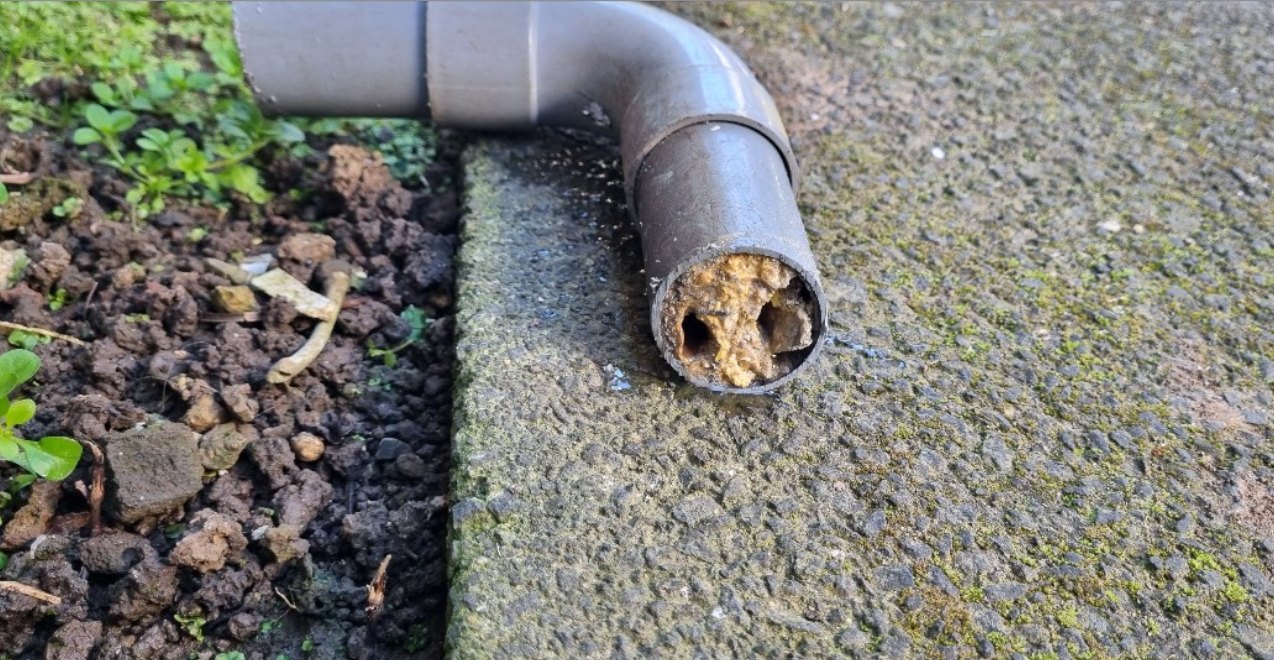
A kitchen waste pipe from another job, cut open. This is what years of grease does to the bore, and why ground food stops getting through.
Some foods make it much worse:
- Eggshells and coffee grounds. Ground fine, they behave like wet sand and pack into the grease rather than washing past it.
- Rice, pasta and anything starchy. These swell with water and turn into a paste.
- Fibrous vegetables such as celery, corn husks and onion skins. The strings wrap and bind.
- Fat poured straight down the sink, with or without the disposer running. It sets as it cools.
Is it the disposer or the drain?
There is a quick way to tell. Switch the disposer on.
- It spins normally, but the water still will not go down. The unit is doing its job. The blockage is in the trap or the pipe after it.
- It hums but does not spin. Something is jamming the grinding plate, usually a bone, a fruit stone or a piece of cutlery. That is a disposer problem, not a drain problem.
- Nothing at all. Check the reset button on the bottom of the unit and the power supply before anything else.
On a double sink, if the other bowl fills up when you run the disposer side, that also points to a blockage in the shared pipe below both bowls.
What can I try before calling a plumber?
A few things are safe to try:
- Turn the disposer off at the wall before you put a hand or tool anywhere near it.
- Use a plunger on the disposer side, with the other bowl’s plug in or held shut with a wet cloth. A soft blockage close to the trap sometimes moves.
- Open the trap if you are confident. Put a bucket underneath first, because everything above the blockage will come out. If the trap is packed like the one in Forrest Hill, clearing it by hand can get the sink draining again.
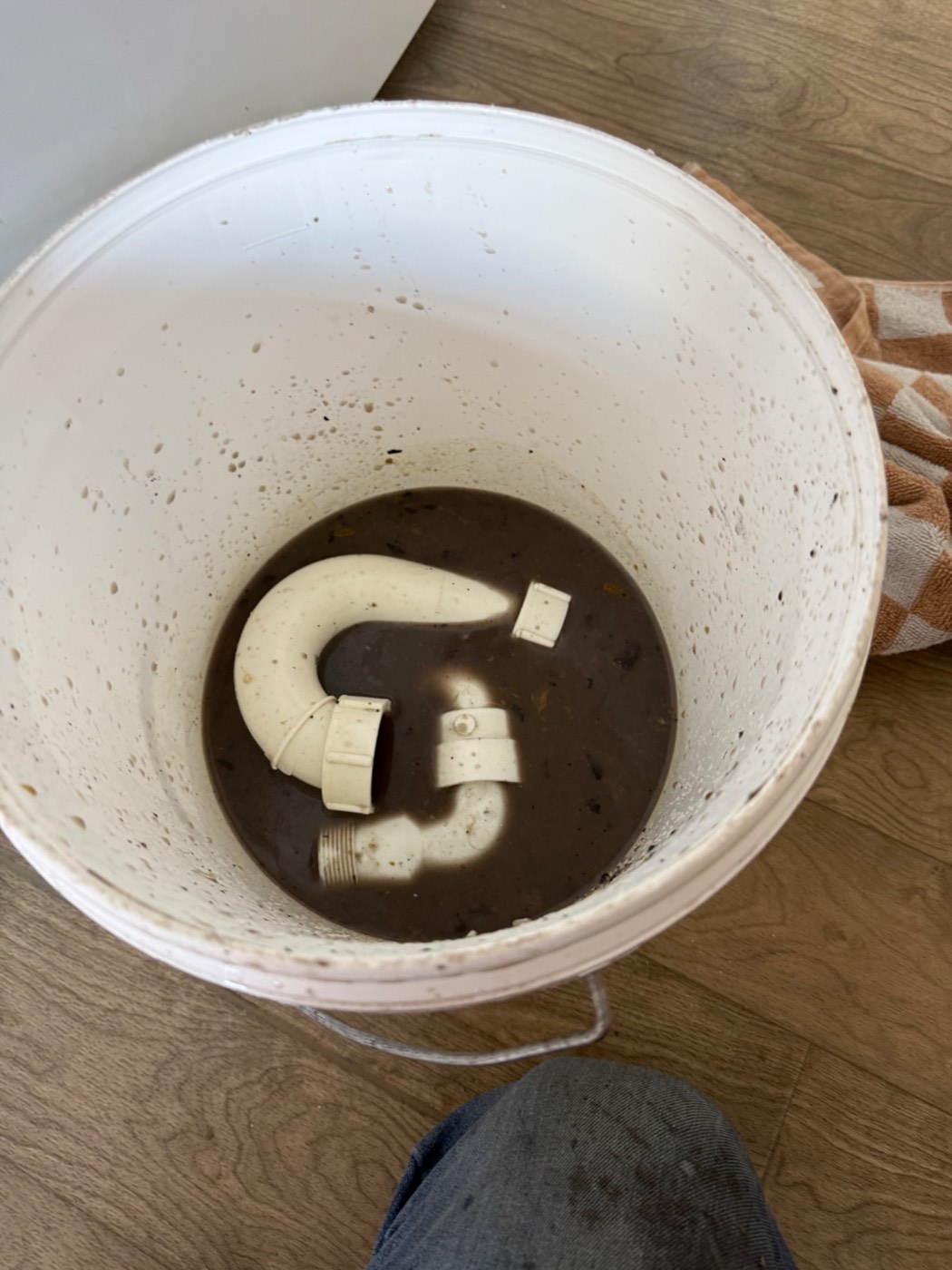
The Forrest Hill trap taken apart. The bucket is everything that was sitting in the sink and the pipe above the blockage. 4. Run plenty of cold water while the disposer is on, and for a few seconds after. Cold water keeps fat solid so it is carried along rather than smeared on the pipe.
What not to do: do not pour chemical drain cleaner into it. On this kind of blockage, the liquid sits on top of a solid plug of grease and food and does nothing. It also makes the job unpleasant and unsafe for whoever has to open the trap afterwards. Avoid pouring kettles of boiling water into plastic traps and joints as well.
When does it need a plumber?
Call someone if the trap is clear but the sink still will not drain, if you can hear gurgling from other fixtures, or if the blockage keeps coming back within weeks. That means the build-up is further along the pipe, past where you can reach.
A plumber will usually take the trap off, clear the waste line through to where it joins the main drain, and replace the trap if it is cracked or caked inside. On older kitchens where the pipe itself is narrowed with grease, a drain machine or water jetter is the proper fix, and a camera can show how far the build-up goes. Most of these are single visits.
How do I stop it happening again?
- Scrape plates into the bin or compost before rinsing. Treat the disposer as a back-up, not the main way food leaves the kitchen.
- Keep eggshells, coffee grounds, rice and fat out of it.
- Run cold water before, during and after using the disposer.
- Wipe greasy pans with a paper towel before washing them.
Common questions
Why does my disposer smell even when the sink drains?
The smell is usually food stuck to the underside of the rubber splash guard and the inside of the grinding chamber, not the drain. Turn the unit off at the wall, lift the splash guard and clean under it with a brush. Grinding a few ice cubes and a cut lemon with cold water running helps clean the chamber. If the smell is coming from the trap, it may be partly blocked and holding old food, and that is worth clearing.
Can I replace the sink trap myself?
On most kitchens, yes. Traps are held on by slip nuts that undo by hand or with a pair of grips, and they are standard sizes from any plumbing supplier. Take the old one with you so you match the size and the outlet direction. Make sure the washers seat properly when you put the new one on, and run water for a minute to check for drips before you close the cupboard.
Is a waste disposer allowed on a septic tank?
It depends on the tank and the system. A disposer sends extra solids into the tank, which means it fills faster and needs pumping out more often. Some on-site systems are not designed for that load. If your home is on septic, check with the system supplier or your council before installing one.
How long should a waste disposer last?
Most units last around 10 to 15 years with normal household use. Signs one is near the end are leaks from the body of the unit, constant humming without spinning even after it has been cleared, or the motor tripping the reset button repeatedly. A leak from the unit itself is a replacement job, not a repair.
Can I put a disposer in a kitchen that does not have one?
Usually, yes. It needs a power point under the sink, enough room in the cabinet, and a sink waste that suits the unit. If the existing waste pipe is old and already narrowed with grease, it is worth having it cleared or replaced at the same time, or the new disposer will block it faster. See our waste disposer service page for what an installation involves.
Related reading
- Blocked drains in Auckland: the full guide
- What plumbers wish you would stop putting down your kitchen sink
- Kitchen renovation plumbing in Auckland
- Why does my bathroom smell like sewage?
A blocked sink under a disposer is usually a pipe problem, and usually a single visit. We cover Forrest Hill and the North Shore. Call 021 837 775.