
A Grey Lynn kitchen renovation came to us with the cabinets planned and a gas cooktop chosen. There was a small 9kg LPG bottle on the property, sitting in a spot that no longer worked for the new layout. The plumbing side was a normal kitchen: sink, mixer, new traps and isolation valves.
The gas side started outside. We moved the bottle point to a proper outside position, ran new gas pipe from there to the cooktop location while the walls were open, and connected and tested the cooktop once the benchtop was in. The job finished with a gas certificate for the installation. Two visits, a few days apart, fitted around the cabinetmaker.
That order matters. People tend to think of a gas cooktop as an appliance swap. It is really a small gas installation with a cooktop on the end of it.
Can I put a gas cooktop in if my house has never had gas?
Almost always, yes. The first question is where the gas will come from.
- Natural gas: if there is a gas main in your street, the network can connect the property and fit a meter. This takes time to arrange, and your retailer will explain the connection charges. Once connected, you pay a daily fixed charge plus usage.
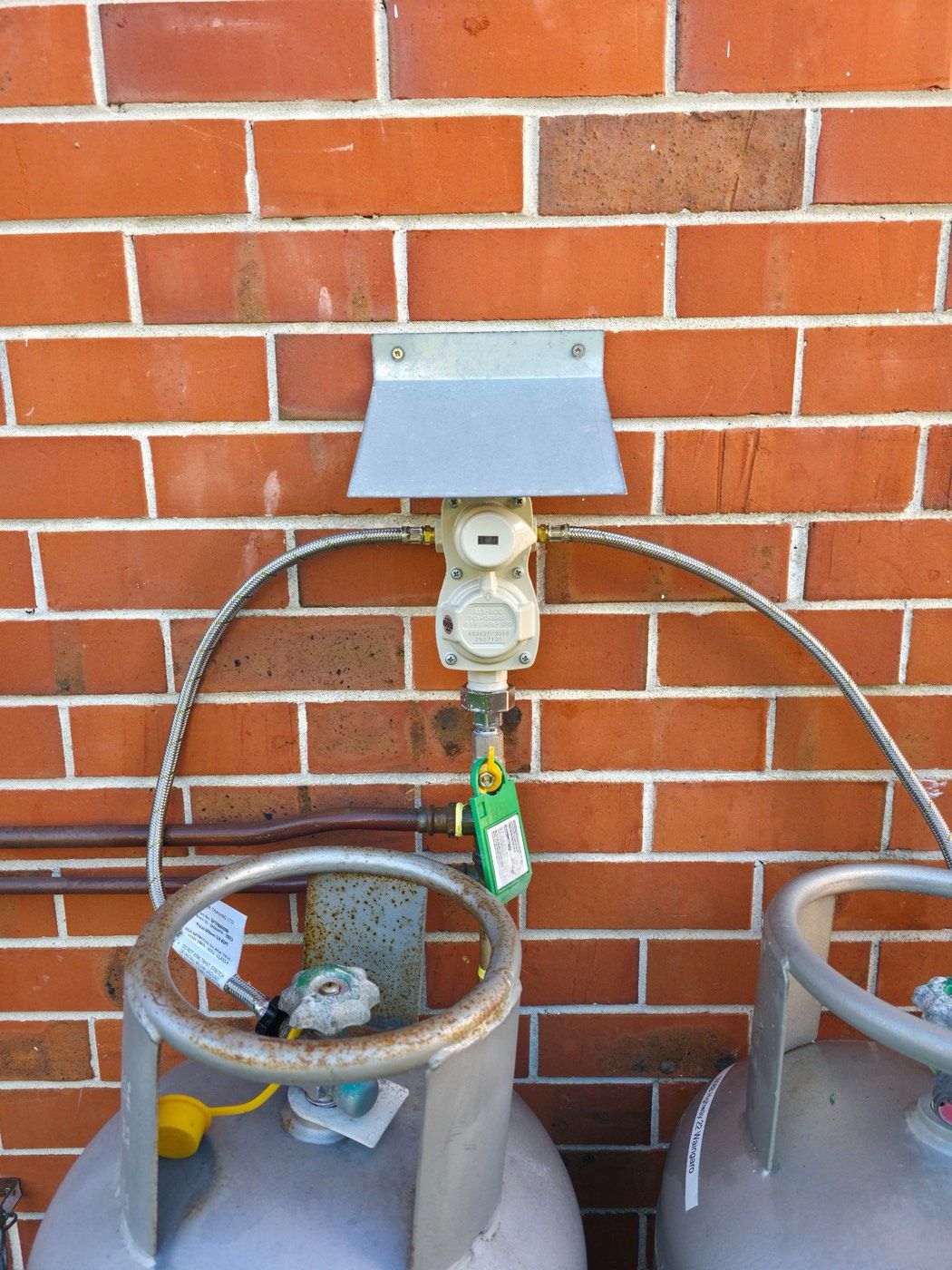
- LPG bottles: available anywhere, including streets with no gas main. A pair of 45kg bottles with an automatic changeover regulator is the usual setup for a house, and a supplier delivers them. A single 9kg bottle works for a cooktop alone, but you will be swapping it often.
Cooktops are set up for one gas type or the other. The injectors for natural gas and LPG are different, so tell us which supply you are going with before the cooktop is bought. It can usually be converted, but it is easier to get right from the start.
Where do LPG bottles go?
Outside, on a firm level base, with the regulator mounted on the wall above them. There are rules about how close bottles can be to windows, doors, drains and sources of ignition, so the obvious spot beside the back door is not always allowed. We check the options at the site visit.
On a Bayview job, the owner upgraded from a 9kg bottle to two 45kg bottles. We laid a concrete paver pad for the new bottles and fitted an automatic changeover regulator, so the second bottle takes over when the first runs empty. Until the big bottles were delivered, we connected a temporary 9kg bottle so the cooktop could still be used.
How does the gas pipe get to the kitchen?
The shortest safe route from the bottles or meter to the cooktop, usually through the subfloor or inside a wall. During a renovation, the best time is when the lining is off, so the pipe can be run and tested before the walls are closed. This is the same stage as a water preline. If the kitchen is already finished, we can often run the pipe under the house and come up inside the cabinet, without opening any walls.
The pipe size depends on the length of the run and what is on the end of it. A cooktop on its own is simple. If you think you might add gas hot water or a fireplace later, say so now, because sizing the pipe for that from the start is far cheaper than replacing it.
What clearances does a gas cooktop need?
The maker’s installation instructions set the distances to side walls, splashbacks, shelves and the rangehood, and the gas standard backs them up. Combustible surfaces close to the burners need protection, and the rangehood height is not just a style choice. Our gas cooktop clearances guide goes through the numbers.
This is also why we sometimes ask for a photo of the finished splashback before issuing the certificate. The certificate covers the whole installation, and it can only be signed once the surroundings are in place and compliant.
What paperwork should I get?
Every new gas installation should come with a gas certificate from the certifying gasfitter who did the work, showing that it was tested and meets the standard. Keep it with your house documents. Insurers, buyers and property managers ask for it. If someone offers to connect a cooktop without paperwork, that is the time to find someone else.
Common questions
Does a gas cooktop need electricity?
Most modern gas cooktops need a power point under the bench for the ignition, and some have electronic controls. The burners themselves run on gas. Check the cooktop’s instructions and make sure there is an outlet in the cabinet below before the benchtop goes on.
How long does it take to install a gas cooktop from scratch?
With LPG and a straightforward pipe route, the gas work is usually one day. During a renovation it is split into two visits: the pipe run while the walls are open, and the connection once the benchtop is in. A new natural gas connection takes longer to arrange, because the network has to install the meter first.
Is LPG or natural gas cheaper for just a cooktop?
For a cooktop on its own, the fixed charge often decides it. Natural gas carries a daily connection charge whatever you use, while LPG costs bottle rental and the gas itself. A household that only cooks with gas often finds bottles cheaper. If you are also running gas hot water, natural gas usually comes out ahead.
Can I move my cooktop to the island?
Yes, and it is a common part of kitchen renovations. The gas pipe comes up through the floor into the island cabinet. The bigger questions for an island are ventilation and clearances, so plan the rangehood and the cooktop together rather than separately.
Can I switch back to induction later?
Yes. The gas line is capped off and tested by a gasfitter, and the kitchen needs a suitable electrical circuit for the induction cooktop. We cover what happens to the gas line in switching from gas to induction.
Related reading
- Gas cooktop clearances and connections: what the standard requires
- Your LPG bottles: running out, changeover regulators, and why they empty fast
- Bottled gas: where the shut-off is, and what to check
- Kitchen renovation plumbing in Auckland
- Gas work at home: what needs a certifying gasfitter
We install gas cooktops and LPG systems across Grey Lynn, Bayview and the rest of Auckland. See our gasfitting services or call 021 837 775.