
A property manager called about a rental in Browns Bay where the tenant could smell gas in the kitchen. Not all the time, and not strongly, but enough to be worried. We attended the same day.
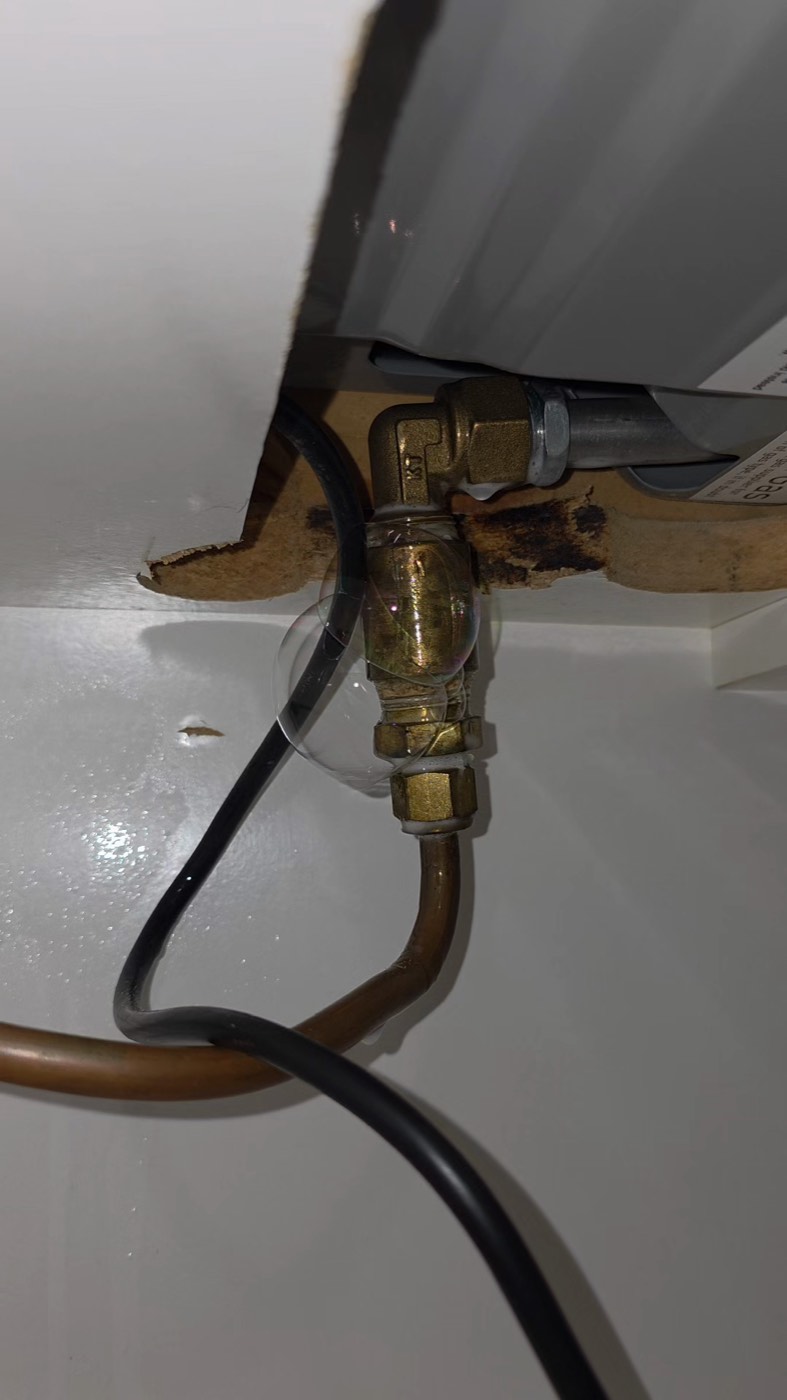
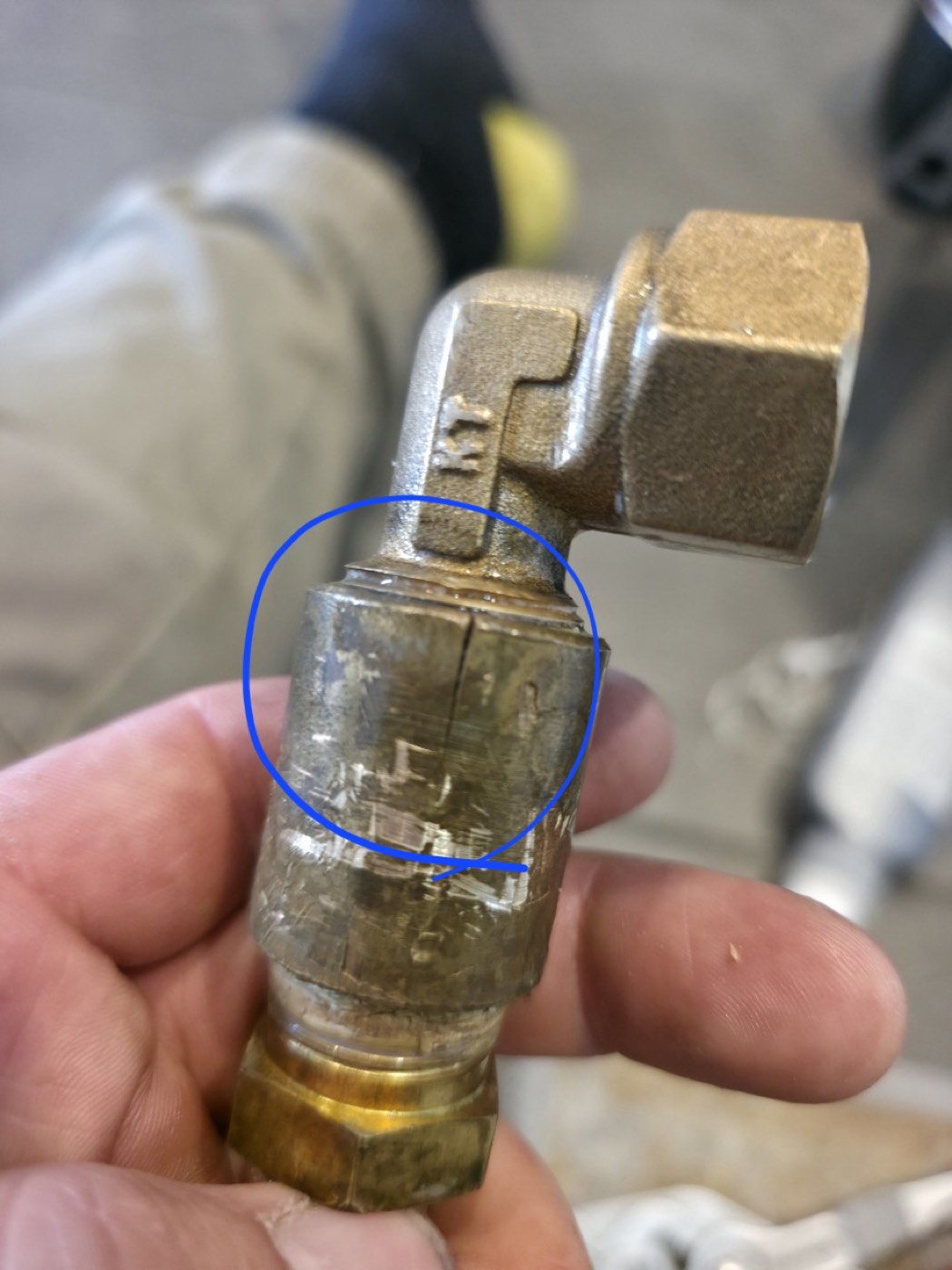
The cooktop was the obvious place to start, so we started there. With the gas on, we brushed leak detection fluid over each joint in the pipework under the bench. Most of them stayed flat. One brass fitting on the connection into the cooktop grew a bubble, slowly and steadily, which is what a small leak looks like. When we took the fitting out, there was a crack running around the body of it. The tenant mentioned that someone had done some work under the cooktop a short time before. Brass cracks when it is over tightened or forced, and it does not always show until the gas pressure finds the weak spot.
We fitted a new 15mm brass fitting, leak tested the line again, and confirmed it was gas tight. The cooktop was back in use the same day.
What should I do if I smell gas?
Treat it as real until someone has proved otherwise.
- Do not create a spark. Leave light switches, appliances and the doorbell as they are. Do not light anything, and do not start a car in an attached garage.
- Open doors and windows to let the gas clear.
- Turn the gas off at the bottles. On bottled LPG, turn the valve on top of each bottle clockwise until it stops. Natural gas meters have their own shut-off valve. If you are not sure how it works, leave it alone and make the call.
- Get people out if the smell is strong or you can hear hissing, and make the call from outside.
- Call the right people. On natural gas, a leak at the meter or on the street side of it belongs to Vector, which runs the gas network in Auckland, and they have an emergency line. Anything after the meter, which is the pipework in and around your house, and anything on an LPG system, is a job for a certifying gasfitter.
Is every gas smell a leak?
No. Gas has an added smell so you can detect it, and some appliances release a small amount as they light. A continuous flow water heater next to a bathroom window is a common example. We cover that one in a gas smell only when the shower runs. A cooktop burner that takes a second to catch will do the same.
The difference is timing. A smell that appears only when an appliance lights and then fades is usually ignition. A smell that is there when nothing is running, gets stronger overnight, or sits in one spot is not normal, and it needs testing.
How does a gasfitter find a gas leak?
We use two tests, and they answer different questions.
The pressure test checks the whole installation. We isolate the gas, connect a gauge and hold the pipework at pressure. If the reading drops, gas is escaping somewhere between the meter or bottles and the appliances. If it holds, the pipework is sound.
The bubble test finds the exact point. Leak detection fluid goes on each joint, fitting and valve along the line. A leak shows up as bubbles growing at that spot, like the one in the photo at the top of this page. Fittings under cooktops, the regulator at the bottles and joints at the water heater are where we find most of them.
Doing both matters. A pressure test tells you whether there is a leak. A bubble test tells you where it is, so the repair is one fitting instead of a guess.
What if no leak is found?
It happens, and it is still a useful result. At a house in Hillcrest, the owner had heard a hiss at night and smelled gas. We carried out a bubble test and a pressure test, and showed the owner both on site. The pipework and appliances tested sound. The real question was why a 45kg bottle had emptied so fast. Once the installation is proven tight, that points back to the bottle and its valve, which is the supplier’s equipment. We sent the owner to the supplier with a written result in hand, rather than a vague “we could not find anything”.
If your bottles seem to run out quickly, running out of LPG covers the usual reasons.
Can a handyman fix a gas fitting?
Not legally. In New Zealand, gasfitting has to be done by a licensed gasfitter. A handyman can be excellent at many jobs, but gas work is restricted for good reason, and the Browns Bay job above is what can go wrong. When you have gas work done, you should get paperwork showing who did it and that it was tested. Gas work at home explains what to ask for.
Common questions
Is it safe to stay in the house while I wait for the gasfitter?
If the gas is turned off at the bottles or meter, the smell has cleared with windows open, and nothing is hissing, most people can stay. Leave the gas off until the installation has been tested, even if the smell has gone. If the smell is strong or keeps coming back with the gas off, go outside and call from there. On natural gas, if the smell is at the meter or out towards the street, call Vector’s emergency line rather than a gasfitter.
How long does a gas leak test take?
For a typical house with a cooktop and a water heater, testing takes around an hour. Most small repairs, such as replacing a fitting or a regulator, are done on the same visit. Larger jobs, such as a corroded section of old steel pipe, may need a return visit with the right parts.
Who pays for a gas leak in a rental?
A gas leak is the landlord’s responsibility to fix, and it counts as an urgent repair. Tenants should report it to the property manager or landlord straight away, and turn the gas off in the meantime. We often attend on a property manager’s work order and send a report with photos showing what was found and fixed.
Can a gas leak make my bottles run out faster?
Yes. A steady leak at a regulator or fitting can take a noticeable amount of gas over a few weeks, especially if it runs day and night. If your usage has not changed but the bottles empty sooner, get the installation tested before blaming the supplier. If the test passes, the bottle and its valve are the next thing to check.
Do gas appliances need servicing to prevent leaks?
Fittings do not wear out quickly, but regulators, flexible connectors and old steel pipe do. Appliances like fireplaces and water heaters should be serviced on the maker’s schedule, and a leak check on the connections is part of that. It is also worth a check after any work near the gas line, such as a kitchen change or a new cooktop.
Related reading
- Why do I smell gas when I turn on the shower?
- Bottled gas: where the shut-off is, and what to check
- Your LPG bottles: running out and changeover regulators
- Gas cooktop clearances and connections
- Gas work at home: what needs a certifying gasfitter
We test and repair gas installations across Hillcrest, the North Shore and the rest of Auckland. See our gasfitting services or call 021 837 775.