
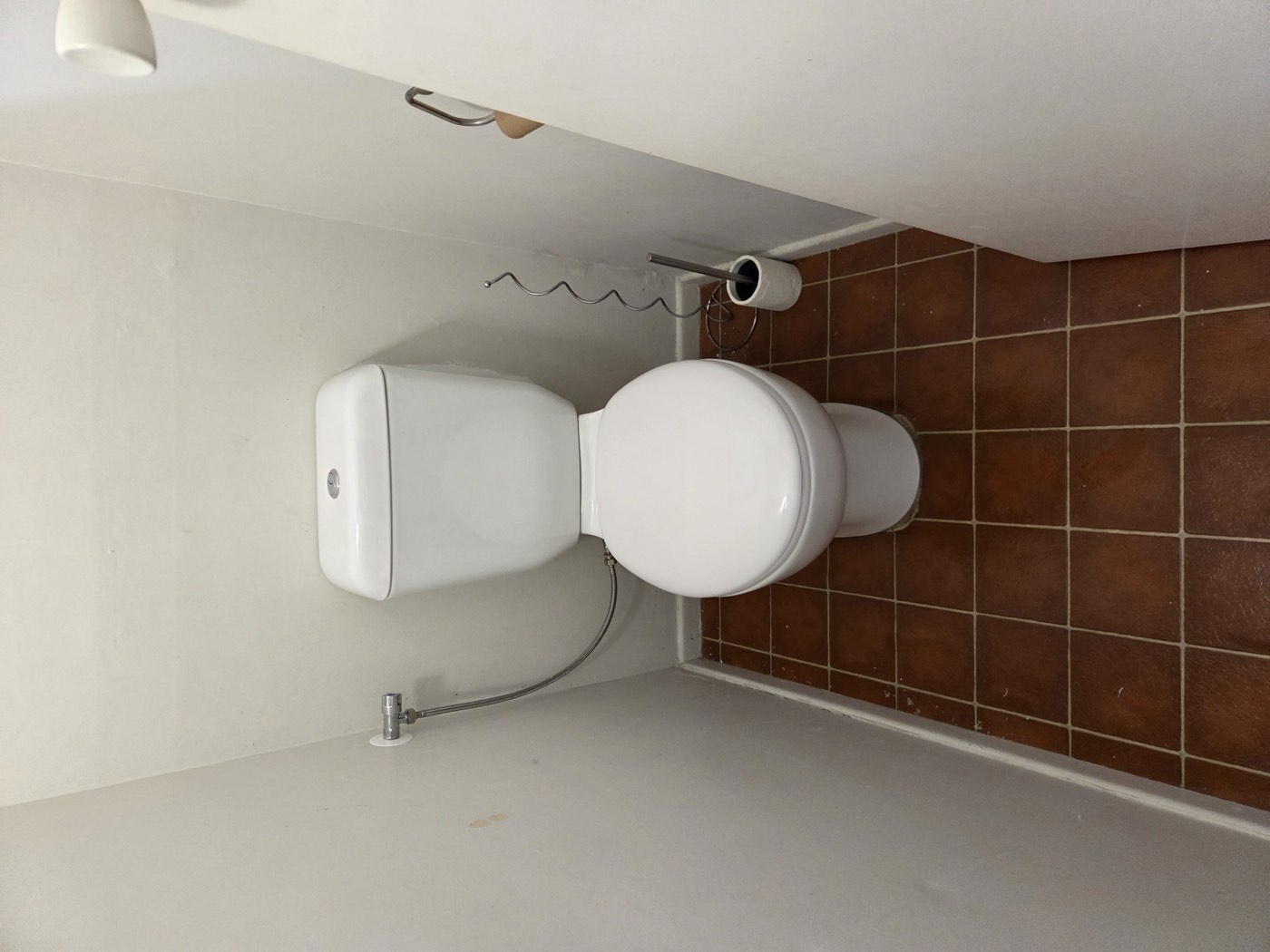
Most toilet replacements are simple. The ones that are not are almost always the same story: somebody bought a toilet they liked, and it did not line up with the hole in the floor.
A toilet has to match four things that are already in your bathroom. Get those right and it is a straightforward morning’s work. Get one wrong and the job stops, because the new pan is sitting in the middle of the floor and nothing connects.
Here is what to check, and what to send us before you buy anything.
Send a photo first. It saves the whole thing
This is the single most useful thing a homeowner can do, and it takes a minute:
- The whole toilet from the side, standing back far enough to see the wall behind it and the floor
- Where the waste goes. Straight down through the floor, or out the back into the wall
- Where the water comes in, and which side. Look for the small stop tap and the hose running to the cistern
- A tape measure on the floor, from the finished wall to the centre of the waste
- The floor and skirting around the base, especially if anything looks soft, stained or lifted
From that we can tell you what will fit, what will not, and whether anything else needs sorting first. Guessing from a showroom photo is how a one visit job becomes three.
S trap or P trap, and the set out
This is the one that decides everything.
S trap means the waste leaves the pan and goes straight down through the floor. Most older Auckland houses on piles are S trap. The measurement that matters is the set out: the distance from the finished wall behind the toilet to the centre of the waste.
P trap means the waste leaves the pan horizontally and goes out through the wall. Common in concrete floor homes, apartments and newer townhouses. The measurement that matters there is the height from the floor to the centre of the outlet.
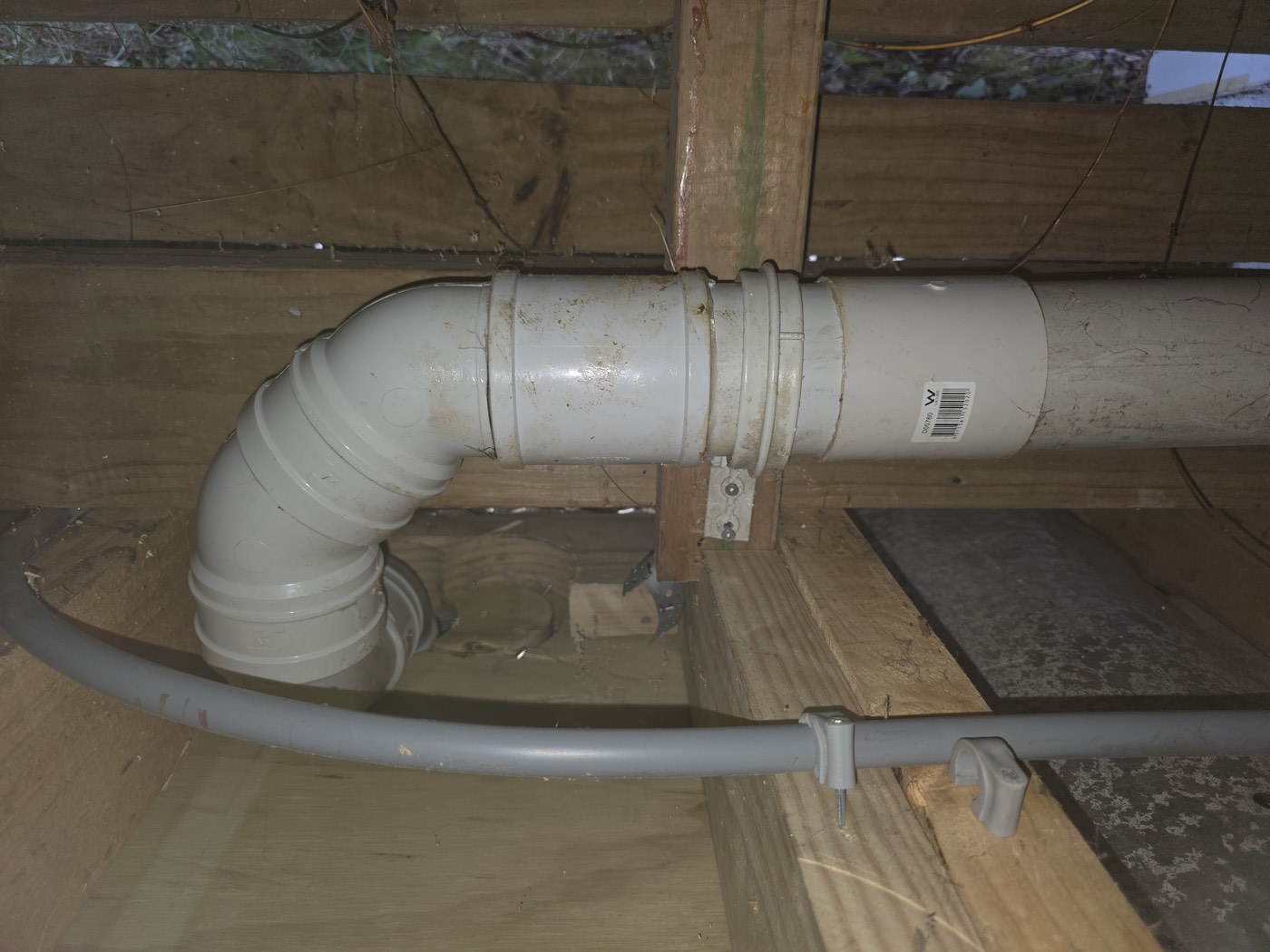
New toilets are sold to suit one or the other, and each model has a set out it is designed for. Older houses often have a set out that no modern pan matches on its own. The ways around that, in the order we would try them:
- A connector suite. Several ranges are sold specifically to cope with a range of set outs, with an adjustable connector between the pan and the waste. This is the usual answer
- An offset or adjustable pan connector on a standard suite, where the difference is small
- Moving the waste. Cutting the floor, altering the drain, making good. This is a real job and it is quoted separately, which is why we would rather find out now than on the day
Where does the water come in?
Cisterns are made with the inlet in different places, and it has to suit where your stop tap already is.
- Bottom inlet is what most modern cisterns use. The supply comes up into the base of the cistern
- Back inlet comes in behind, hidden
- Side inlet, left or right, is common on older cisterns
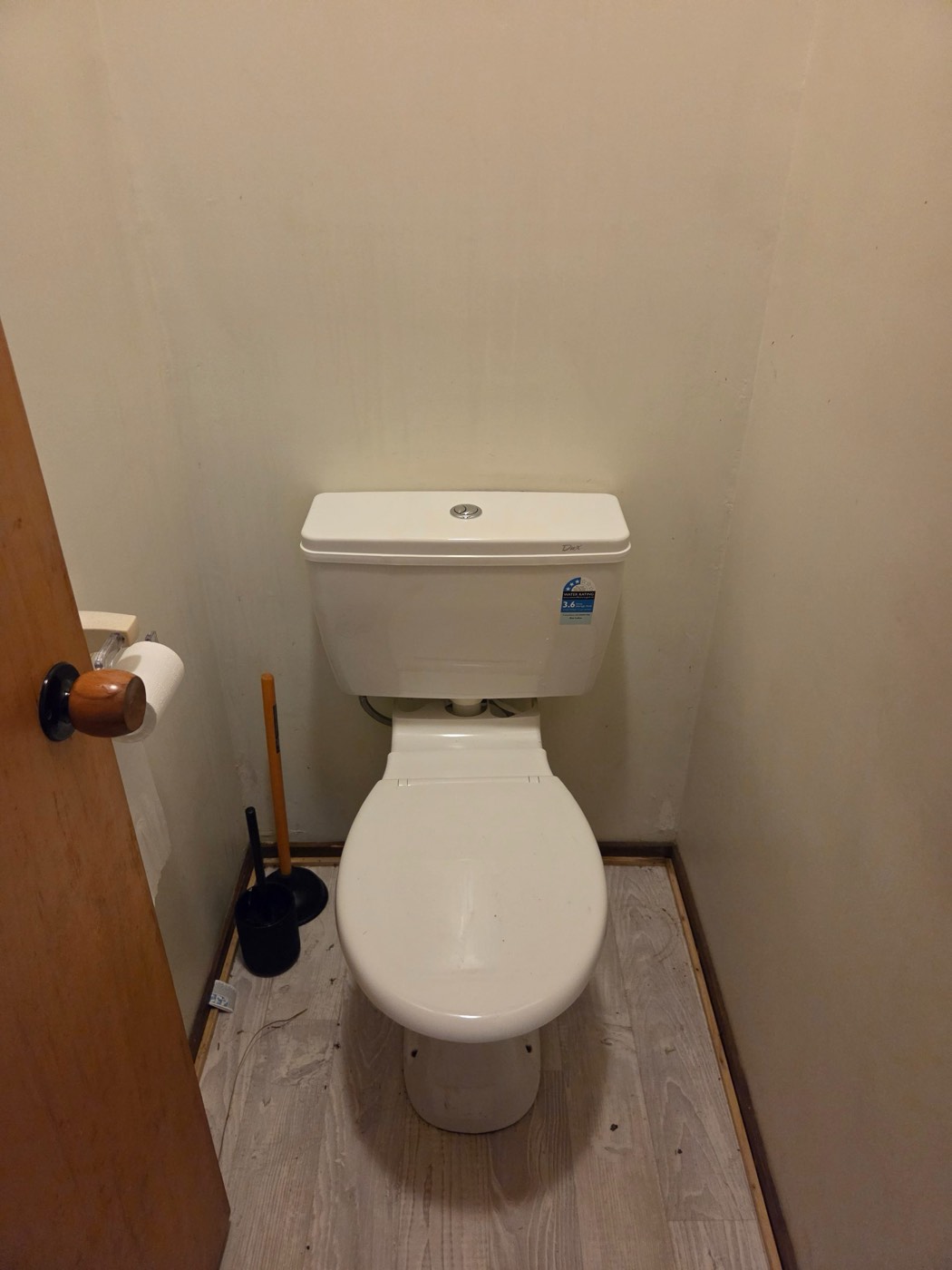
If your old cistern was side inlet and the new one is bottom inlet, the existing supply may need altering to suit. That is a small job on its own, but it has to be known before the day, not discovered halfway through. The same goes for which side the stop tap is on, since a cistern is not always happy being fed from the other side.
Expect the floor or the wall to need some work
The new toilet will not have the same footprint as the old one. That matters more than people expect:
- Vinyl is usually cut around the old pan, so lifting it exposes an unfinished edge or a different colour
- Tiles may have been laid up to the pan rather than under it
- Paint and wallpaper behind the cistern will not match once a different shaped cistern sits there
- Fixing screws rarely land in the same place
And sometimes the floor itself is the problem. On a Mt Roskill job the toilet had been leaking long enough that the floor moved underfoot. We pulled the toilet out first so the builder could look at the floor and decide, before anyone spent money on a new suite. That is the right order: find out what is under it before you buy what goes on top of it.
If the floor is soft, the toilet is not the job. The floor is the job.
If it is a rental, buy for parts
For a rental we would not buy the nicest looking toilet. We would buy the one whose parts are on the shelf.
Every toilet eventually needs an inlet valve, an outlet valve, a seal, a button or a seat. On a well supported brand, that is a stocked part and a short visit. On something imported or discontinued, the part does not exist here, and the cheap fix turns into a full replacement.
Dux and Caroma are the safe choices in New Zealand for exactly that reason. Widely fitted, parts in every merchant, and any plumber who turns up will know the unit.
One related thing worth knowing: when a cistern’s valves fail, it is often cheaper to replace the whole cistern than the parts. On a West Harbour job the fill valve and flush valve had both gone, and the replacement parts came to more than a new cistern, so we fitted a new bottom inlet cistern with new valves and button as one unit. Ask which way it works out. It is not always the answer you would expect.
Wall hung and in wall cisterns are a different job
If your toilet is wall hung, or the cistern is hidden inside the wall behind a flush plate, treat it as its own project and get it quoted separately.
Why it is not comparable to a standard swap:
- The pan hangs off a frame inside the wall, which has to be there and has to be sound
- All the working parts live behind the wall, reached through the flush plate opening. Access is the job
- The valves are brand specific. We usually have to identify the cistern, order the right parts and come back. On a Mission Bay unit with a concealed Valsir cistern, that was exactly the sequence
- A leak from a concealed cistern is invisible until it has been going a while. On another job the vanity cabinet had to come out before anyone could even see what was wrong
They are not a bad choice. They look better and they free up floor space. They are just not a like for like swap, and they should never be quoted as one.
Adding a bidet while you are at it
Worth doing if you are replacing the toilet anyway, because the water connection is already open. Two kinds:
A bidet seat replaces the toilet seat and takes a water feed from the cistern supply. Electric models need a power point within reach, which is an electrician’s job if there is not one.
A hand held spray on a hose, fitted beside the pan.
Both need the same thing, and it is the part that gets missed: backflow prevention. A spray head that can sit inside the pan is a cross connection to your drinking water, so the connection has to be protected. We fit an anti siphon vacuum breaker on most installs, and an RPZ valve where the layout calls for it. At a Mt Roskill property we removed a hand spray bidet that had been fitted with no device at all, because it was not compliant and the toilet was being replaced anyway.
One more, from a Hillcrest callout: a hand held bidet hose burst and flooded the bathroom, and the water travelled across the concrete floor into the carpet. House pressure was high, which will not have helped. If you are adding a bidet, it is worth knowing whether your house pressure is where it should be, because every flexible hose in the place is living with it.
What the day itself looks like
For a straightforward swap: isolate the water, drain and remove the old suite, check the waste and the floor, fit the new pan and connector, set the cistern, connect and test, then check for movement and leaks under load. Most of a morning, less if nothing surprises us.
What turns it into more than that is always one of the four things above, which is why we would rather see the photos first.
Text us a photo of your toilet and we will tell you what will fit before you buy it, or give us a call. We work across Auckland.
Common questions
How do I know if I have an S trap or a P trap toilet?
Look at where the waste leaves the pan. If it goes straight down into the floor, it is an S trap, which is most older Auckland houses on piles. If it goes out horizontally into the wall behind, it is a P trap, which is more common on concrete floors, in apartments and in newer builds. A photo from the side shows it clearly.
What is a toilet set out and why does it matter?
The set out is the distance from the finished wall to the centre of the waste. Every toilet model is made for a particular set out, so if yours does not match, the new pan will not sit against the wall and connect at the same time. Connector suites and adjustable pan connectors cover a range of set outs, which is why they get used so often in older homes.
Can I buy a toilet myself and have a plumber fit it?
Yes, and plenty of people do. Send a photo and the set out measurement before you buy, because the common problem is not the quality of the toilet, it is that it does not suit the waste, the inlet position or the space. If it is a rental, favour a brand whose spare parts are stocked in New Zealand, such as Dux or Caroma.
Will replacing the toilet damage my floor or wall?
It will usually expose something rather than damage it. The new suite has a different footprint, so vinyl cut around the old pan, tiles laid up to it, and paint behind the old cistern rarely line up with the new one. Worth budgeting for a small amount of making good, and worth checking the floor underneath is sound before you buy anything.
Why is a wall hung or in wall cistern toilet more expensive to replace?
Because the working parts sit inside the wall. The pan hangs off a frame that has to be sound, the valves are reached through the flush plate opening, and the parts are brand specific, so they usually have to be identified and ordered before the repair visit. It is a separate quote rather than a variation on a standard toilet swap.
Related reading
- That drip, drip, drip: fixing a leaking or running toilet
- Choosing a tap or mixer in a New Zealand home
- Bathroom renovation plumbing in Auckland
- Blocked drains in Auckland: what is blocked and whose pipe it is
- Is your home protected from high water pressure?
- Plumbing for property managers in Auckland
- Why your Saniflo needs a service once a year
Getting the set-out right before you buy is most of the job. Toilet supply and installation sit under our residential plumbing service. Call 021 837 775.