
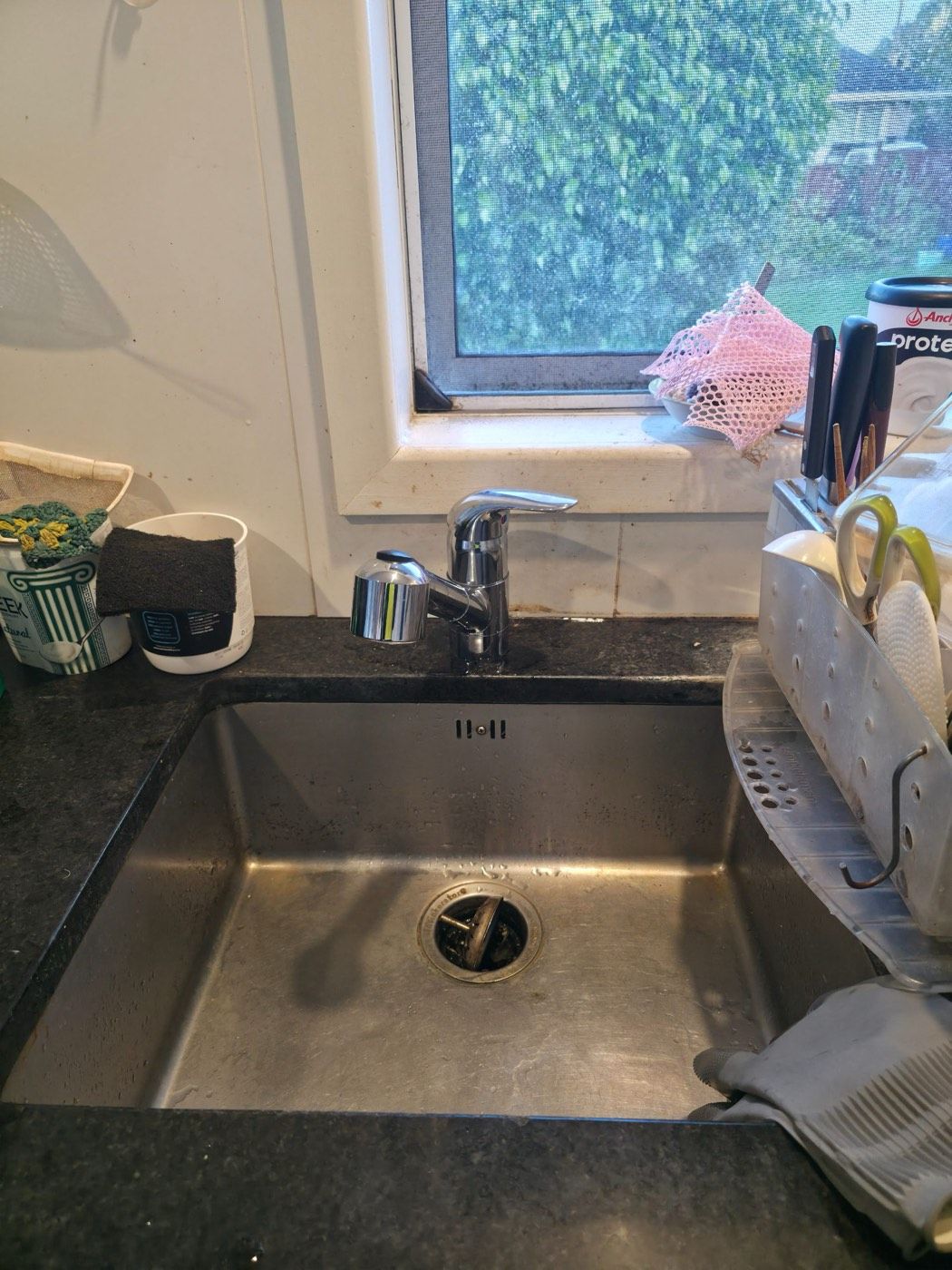
Most people choose tapware the way they choose a light fitting. They find one they like, buy it, and book a plumber to put it on. Then one of five things goes wrong, and it is never the finish.
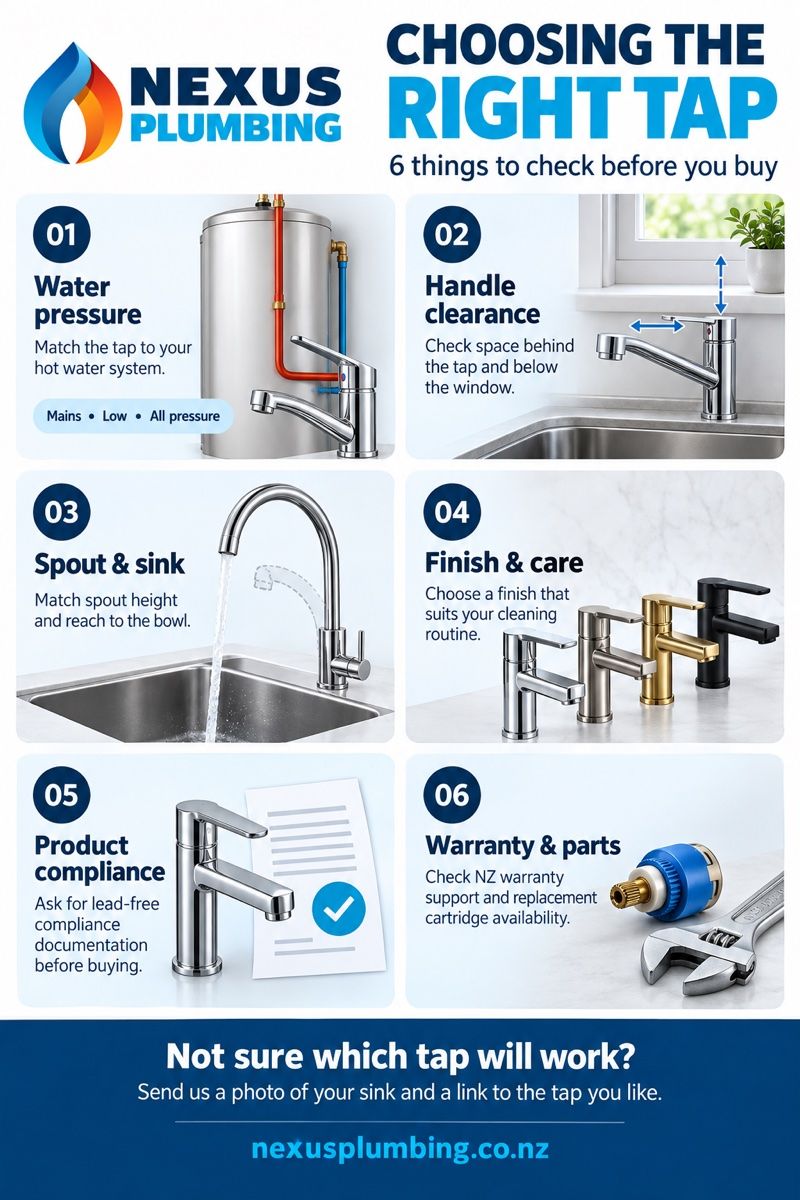
A tap has to suit the hot water system it is plumbed to, fit the space it sits in, put the water where you want it, meet the lead rules that changed this year, and still have parts available in five years. Get those right and the style is free. Get the first one wrong and you have a beautiful tap that dribbles.
Here is the order we would work through it in.
What you are probably here about
| What you have noticed | Usually means | What to do |
|---|---|---|
| New tap, hot water barely trickles | Mains pressure tap on a low pressure cylinder | Wrong class of tapware, not a faulty tap |
| Hot goes cold when you mix it | Unequal pressure pushing cold across the cartridge | All pressure mixer, adjusted for the system |
| Handle will not open fully | Lever hits the window sill or splashback | Side lever, or a folding spout mixer |
| Water sprays over the bench | Spout too high or too short for the bowl | Match spout height and reach to the sink |
| Tap failed after 18 months | No parts available in New Zealand | Buy where the cartridge can be replaced |
| Bought a tap online, plumber hesitant | Lead free compliance cannot be shown | Check before you buy, not after |
First: which hot water system is it?
This is the one that catches people, and it is specific to New Zealand housing.
In a mains pressure home, hot and cold arrive at the tap at the same pressure. Everything on the shelf works.
In a low pressure home, which is most older Auckland houses with an open vented copper cylinder, the hot side is fed by gravity from a header tank or the cylinder itself. The cold is still on the street main. So you can have cold at around 500 kPa and hot as low as 35 kPa at the same tap. That is called unequal pressure, and it changes what the tap has to be.
Tapware is sold in three classes:
- Mains pressure only. Small waterways, designed for equal pressure both sides. Fit one to a low pressure hot supply and the hot barely comes out. Worse, the cold pushes back through the cartridge and you get cold water when you ask for warm.
- Low pressure only. Larger waterways so gravity flow still works. Cross handle taps in this class use jumper valves rather than ceramic discs.
- All pressure, sometimes sold as universal. Works on both. Usually has a restrictor on the cold inlet that the plumber sets on the day, which is what balances the two sides.
If you do not know which house you are in, the cylinder tells you. An open vented cylinder has a vent pipe running up and out, often finishing over the roof, and that is low pressure. A mains pressure cylinder has a valve set on the cold inlet and a pressure relief line to a tundish or outside. If you are still not sure, that is a phone call, not a guess. All pressure tapware is the safe default and is why most of what we install now is that class.
Will the handle actually open?
A single lever mixer needs room to lift, and often to swing back. Kitchen sinks in New Zealand houses sit under a window more often than not, and the sill is usually low.
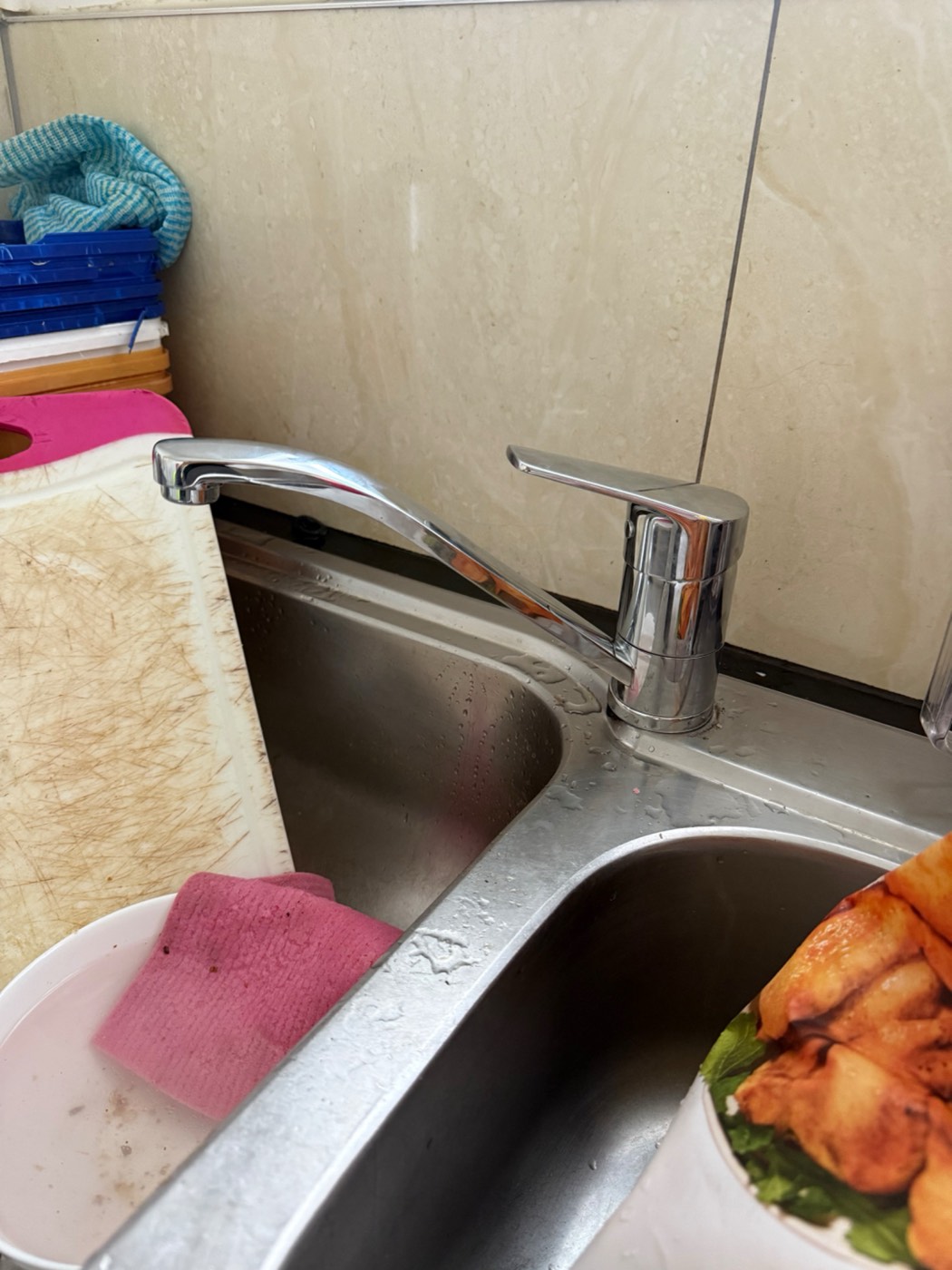
Before you buy, measure two things: how far it is from the benchtop to the window sill or splashback, and how far behind the tap hole you have before the wall. Then check the tap’s own drawing for the height it needs with the lever fully up. If it is tight, there are three ways out:
- A side lever mixer, where the handle sits on the side of the body and swings sideways instead of up and back
- A low profile mixer with a forward set lever
- A folding spout mixer, sometimes sold as a window mixer, which lays down flat so the window can still open over it
The one that gets missed is the window itself. If the sash slides down or swings in, the tap has to clear it when the window closes, not just when it is open.
Gooseneck, standard, or pull out?
A gooseneck or high rise spout looks better than anything else in a kitchen. It also puts the water outlet 250 mm or more above the base of the sink, and water falling that far into a flat shallow bowl bounces straight back out onto you and the bench.
That is not a reason to avoid them. It is a reason to pair them properly:
- Gooseneck and high rise suit a deep bowl, roughly 180 mm and deeper, where the sides catch the splash
- Shallow or flat bottomed sinks, and most inset stainless bowls around 150 mm, are happier with a standard or low profile spout
- Spout reach matters as much as height. The stream should land in the middle of the bowl. Landing it on the waste flange or near the front edge is what actually soaks the floor
- An aerated stream splashes less than a solid one, and a pull out spray lets you take the water to the dish instead of the other way round
For bathrooms the same rule applies in miniature. A tall vessel mixer over a shallow countertop basin will splash every time, and that basin is usually right next to a mirror.
Finishes and colour
Chrome is the workhorse. It is the cheapest to replace, it is the most forgiving, and every merchant has it.
Brushed nickel, gunmetal and brushed brass are usually PVD coated, which is a hard vacuum applied finish and holds up well to normal cleaning. Matte black varies a lot by brand. Some are PVD, some are a paint or powder finish that marks if anyone ever takes a scouring pad or a bathroom cleaner with bleach or acid to it.
Two things worth knowing. First, the finish warranty is often shorter than the body warranty, so read them separately. Second, Auckland water is soft, so scale is less of a problem here than in many places, but black and dark finishes still show every water spot. If nobody in the house will wipe the tap down, chrome or brushed nickel will look better in three years than matte black will.
Lead free: the rule changed on 2 May 2026
This is new and most homeowners have not heard about it.
Under Building Code clause G12.3.2, any product containing copper alloy that is in contact with drinking water must now have a weighted average lead content of no more than 0.25%. The transition period ended at the start of May 2026, so this is live, not coming.
In scope: kitchen taps, basin mixers, pipe fittings and valves, water heaters, water meters, and residential water filtration.
Not in scope: showers, baths and bath mixers, irrigation and other non potable systems, appliances like dishwashers and washing machines, and sanitary fixtures such as toilets.
Compliance is shown by the Lead Free WaterMark, an ANSI accredited certification, or test reports to NSF/ANSI/CAN 372. Anything bought from a New Zealand merchant now will have it. The risk sits with taps ordered directly from overseas marketplaces, where the listing says nothing about lead content and no documentation comes with it. Your plumber has to be able to stand behind the work, so an unmarked import puts both of you in an awkward position on the day. It is a two minute check before you buy and an expensive one afterwards.
Warranty, and why the cheap tap is not cheap
A tap is not one purchase. It is the tap, then the labour to fit it, then the labour to fit the next one.
The failure we see most often on very cheap imported mixers is the cartridge, usually inside two years. On a tap from a brand with a New Zealand distributor, that part exists and you have a choice about what to do next. On a no name import, the cartridge is a non standard size nobody stocks, so there is no choice: the whole tap comes off and a new one goes on. The labour to do that costs more than the tap did.
What to ask for:
- At least seven years on the body, and check what the cartridge is covered for, since it is often listed separately
- A New Zealand importer or agent behind the warranty. A warranty you have to claim through an overseas seller is not a warranty, it is a hope
- Parts availability. If you cannot find the replacement cartridge listed anywhere in New Zealand today, you will not find it in four years either
- Lead free documentation, as above
What a working warranty actually looks like. A rental in Northpark had a Raymor Alpha kitchen mixer, bought from a Mico branch in March 2024. Thirteen months later the cartridge failed and the tap would not shut off. Because there were no isolating valves under the sink, the tenant had to shut the water off to the whole house to stop it running. We got authorisation from the merchant, fitted a replacement mixer from the van on the same visit, and sent the faulty one back. The distributor issued a replacement credit for the mixer and covered our labour and travel. The owner paid nothing at all.
Two things made that possible, and the second one is the part people miss.
The first is that the tap was a brand with a New Zealand distributor standing behind it. The second is that we supplied and installed it, so thirteen months later the purchase record was still ours, the branch, the date and the invoice number, and we could lodge the claim on the owner’s behalf. They did not have to find a receipt, work out who to ring, or argue with anybody.
That is the practical difference between a tap you buy yourself and a tap your plumber supplies. We are happy to fit tapware you have bought. We do it regularly, and we will tell you before we start whether it suits your house. But if it fails in two years, the warranty is yours to chase, and the first thing you will be asked for is a receipt from a purchase you had forgotten about.
None of this means you have to buy the most expensive thing in the showroom. Mid range tapware from a brand that has been in New Zealand for a while does everything a house needs.
What we check before ordering one for you
On site it takes a few minutes: what the hot water system is and what pressure is actually at that tap, the tap hole size in the bench or basin, sill and splashback clearance, bowl depth and where the stream will land, whether there are isolating valves under there already, and whether the flexible tails will reach. Then we can tell you which classes of tap are open to you, and you choose the look from what is left.
If you have already bought one, bring it. We will tell you honestly whether it will work where you want it before anything is cut or disconnected.
We work across Auckland. Text us a photo of your sink and the tap you like and you will get a straight answer on whether they go together, or give us a call.
Common questions
How do I tell if my house is low pressure or mains pressure?
Look at the hot water cylinder. An open vented cylinder with a vent pipe running up and out of the roof is low pressure, and the hot side is gravity fed. A mains pressure cylinder has a valve set on the cold inlet and a relief line running to a tundish or outside. If the hot water in your shower feels noticeably weaker than the cold, that is the same answer from the other direction.
Can I put a mains pressure tap on a low pressure system?
You can fit it, but it will not work properly. Mains pressure tapware has narrow waterways that need pressure behind them, so a gravity fed hot supply produces a trickle, and the stronger cold side can push back across the cartridge so you get cold water when you ask for warm. All pressure tapware is the right answer if you are not certain which system you have.
Why does my new gooseneck tap splash so much?
Because the water is falling further before it lands. A high spout dropping into a shallow flat bottomed sink bounces water back out at you. Gooseneck and high rise spouts belong over deeper bowls, around 180 mm and up, and the stream needs to land in the middle of the bowl rather than on the waste or near the front edge.
Does the lead free rule mean I have to replace my existing taps?
No. The requirement applies to products being installed now, not to tapware already in your house. It matters when you are buying a replacement or fitting out a renovation, and it is one more reason to buy through a New Zealand merchant who can show the product complies rather than an overseas listing that says nothing about it.
What warranty should a decent tap come with?
Look for at least seven years on the body, with the cartridge covered too, and check that a New Zealand importer stands behind it. The warranty period matters less than whether you can actually buy a replacement cartridge here in a few years time. That is the difference between a thirty dollar part and a whole new tap plus labour.
Related reading
- Replacing a toilet: what has to match before you buy one
- A leaking kitchen tap: repair or replace
- Birkenhead: a shower mixer leaking inside the wall
- The garden tap is leaking, or is it?
- Kitchen renovation plumbing: what we do, when, and what you decide first
- Castor Bay: water under the sink in a nearly new kitchen
- Low water pressure: the most common causes
- Water pressure in Auckland homes
- Hot water cylinders: leaking, faulty, or due for replacement
- Bathroom renovation plumbing in Auckland
The right tap for a house depends on its pressure as much as its looks. Tapware supply and fitting sit under our residential plumbing service. Call 021 837 775.